Monday, November 05, 2018

The norms of contact improvisation dance

Every social environment puts some limits on human conduct and expects consent to certain type of conduct. The limits can concern matters ranging from sexual conduct and bodily functions, which are so internalized that they get hardly ever spoken about, to expectations of being quiet as part of a concert audience. Expected (implied) consent may be to being in presence of people consuming alcohol or to hearing vulgar language in a bar. It might be said that in imposing the limits and implying consent a given social environment is coercive.

At any rate, a social environment defines a norm - a normal behavior and conduct. We know the standard concert hall ceremony when the orchestra comes in first, takes the seats, and then stands up when the conductor comes in while the audience claps until the conductor turns to the orchestra and raises the baton - then the audience falls silent and music can begin. This is normal conduct for a concert and the details are not important. People in their individual roles are to behave normally in order for the expected function of the gathering to be accomplished - in this example it is that of making music.

Physical contact is the norm in CI


I would submit that in contact improvisation (CI) we normalize physical contact. This is in contrast to most other social interactions where physical contact is very much avoided. Forms of dance other than CI allow physical contact but there it exists in service to some other goal: constructing the form of the dance or delivering an expressive experience. The examples of tango and butoh come to mind from my own experience. In CI physical contact is the main goal.

When I say that CI normalizes physical contact it means that within CI we can answer the question what normal physical contact is. Thus:

  • contact anywhere the pressure of the body is felt - including weight due to gravity
  • contact is not insistent - it can be stopped or changed at any moment
  • contact is not inquisitive, not an examination aimed at knowledge of the other body as an object
  • contact is protective - of one's own body and of the body of the other


Many would agree that this is a very broad and liberal definition of normal conduct.

The question of consent.


The form of the group dance involves expression of wishes and limits (boundaries) about actions and situations that a participant can get into or not. These are best handled non-verbally. Wishes are less than demands whereas limits are more than dislikes. It is the responsibility of the individual participant to step out of activities they dont want to be in. It is an art of its own to express one's wish in a group in such a manner that it becomes fulfilled. The art develops with practice. Between the wish and limit there is a place of discomfort - while frustrating for the beginner, with experience it becomes an ideal place of departure into a new activity.

Departure from normal CI behavior


Participants who wish to conduct themselves outside of the normal physical contact - for example to perform acrobatics - should certainly negotiate their mutual consent. Their nonconforming conduct would ideally not disturb the normal conduct of others. Those who have not negotiated participation in nonconforming conduct should stay away. It is perhaps needless to say that if too many participants opt for nonconforming behavior then we will see a breakdown of the form.

Friday, October 05, 2018

L'affaire Kavanaugh and the Left

The fight for confirmation of Brett Kavanaugh as Justice on the Supreme Court has aroused  passions which will stay with us and hurt us all for decades.

As he is a nominee of the Trumpist Right, with many perceived right-wing judicial propensities, it is natural that the Left would oppose this nomination. There would be others, myself included, who would oppose him on juridical grounds. Any such opposition, however, should be carried out in a civilized manner in a civilized nation and bring up matters mainly of jurisprudence and ultimately of politics. Politics will always enter the stage as it is the motivating force for the members of the examining body. Only in case of most egregious and unusual matters the personal life of the man should be under the microscope.

Yet the Left chose to bring up an uncorroborated charge of sexual assault supported by testimony of the accuser only. The accused man denies the charge vehemently.

It shows that the Left resorts to a smear campaign that destroys a man's reputation and career in order to achieve political goals. This is Stalinist, this is "by any means necessary,", this is disgusting. By the way, the Left is not just the Democratic party but a large part of society that cheers that effort. These people are the American authoritarian revolutionaries.

Of course, they claim the need for "resistance" to the Trumpist Right. I agree with the need - but by what means?!! There are people on anti-Trump Right who were discussing, and practically campaigning for, voting "blue" in the mid-term election so they prevail in Congress and curb the power of the clown president. I was thinking about voting for the Dems - but now I am too disgusted. Has the Left helped to bolster that initiative?

Quite the opposite. And the Left will also doom the feminist movement. The charge brought against Brett Kavanaugh shows that a woman's unsupported charge can bring down a man's life and career. This charge along with the effects of the #meToo and "believe women" movement shows that women have acquired power that they use to bypass due process and bring down individual men. This has happened already on the Left - a lot! Do the feminists understand what a horrific pit of misogyny is being dug?

There is a medieval quality in the Kavanaugh proceedings. A tenor of a trial by ordeal. On the emotional level, which reaches quite visceral depths, the accuser must strike the registers of truthfulness and the accused comply with the expected signs of innocence in order to be exonerated. Trial by ordeal happening in the chambers of US Senate. Many will not forget that it was at the behest of the Left and of feminism.

PS. ACLU is spending a lot of money on a campaign against the Kavanaugh nomination. Showing that it is just a leftist organization. After 13 years of support I am leaving ACLU as a member.

Saturday, September 08, 2018

Words and Violence

A question asked on social media sought to find out what we think is really at stake in insisting on the proposition that words are not violence. The idea that words are possibly violent is typically quickly dismissed by insisting, after most English-language dictionaries, that violence involves physical force and words are not physical force. However, we need to acknowledge that there are expressions such as "violent argument" and there are harsh insults that lead to violent aggression. Therefore the idea of violence has wider range than its dictionary definition.

While I completely support freedom of speech, including offensive (and violent) speech, I want to call on the classical liberal, being one of them myself, to justify freedom of speech while acknowledging that words and violence are entangled together.

The term "words" is used here as roughly covering the meaning of the Logos which includes: reason, logic, ideas, norms, rules and laws. It is the standard operating area of rational human beings.

The separation between words and violence, speech and act, is a legal construction supported through the history of human thought in order to carve out domains of free activity from controlling tyrants. To question that legal fiction, even in the name of truth, dangerously weakens this long standing effort. Unfortunately, protecting it prevents us from truly considering our relationship to violence.

The proposition about the separation of words and violence is a sort of wishful thinking that ignores the depths of our mental life, which is filled with symbolic and imaginary, yet logically incoherent, structures. They constitute our unconscious, which, according to Lacan, is structured like a language.
Before we are thinking beings we are speaking beings. And we often speak out of the unconscious, incoherent and illogical knowledge. Speech, conscious and not, arises because we are evicted from the immediacy of real life and condemned to inhabit civilization. Therefore, speech, with its symbols and norms, strives more for power than for truth, more for civilization than for satisfaction of instincts. Civilization shapes forces into powers, forces of nature that have no semantics, but our words and language are all about semantics. Words forge forces into powers. Yet since words are frequently not an expression of rationality, powers become irrational.

What is the place of immediacy of life, our seemingly lost home? Lacan would call the lost place the Real. It manifests itself to our inner life as Desire. For Freud it was the object once lost and to be found again - the place of "id", the origin repressed and deformed into the "ego" by civilized life. Rilke speaks about it in his Eighth Duino Elegy (translation my own):

With its whole eyes looks the creation
Into the open. But we have our eyes
Turned around to bar, like set traps,
Its escape and free exit.
What is out there we know only
From the animal's eyes
(...)
This is our fate: to be in relation to It,
Never It, but always in relation. 
(...)
We are spectators, always, everywhere,
Looking at but never outward...
It overwhelms. And we organize. It breaks down.
We fix again. And then decline and die.

Instead of the immediacy of being we are in relation to being and owing to this insufficiency we seek power. We seek power as a technology to master physical forces and as societal norms to master the physical, visceral reality of our bodies. These norms tell us, sometimes whispering imperceptibly, under what conditions we can sit on the floor or take off our shirt or pants. When these norms, and they are basically words that have ascended to the status of power, are transgressed, offense results. Words regulate our bodies.

What is really at stake in saying the words "fuck you" or, for that matter, what is at stake in saying "love you"?(*) Why is it impolite to speak to a newlywed bride words of one's sexual passion and love in front of her new husband and wedding guests? Impolite because it points to a violent content of a certain layer of life that we access only through the proper form. For all the honey flowing from the lips of lovers and potential lovers they are road posts of desire pointing toward the violent content of our life. The melodrama genre is full of that sort of thing and it is brutal.

The melodrama of "fuck you/love you" shows how our words, speech as well as legal and societal norms, are logical and address other words - but some of them are turned toward that from which we have been evicted, from what we have lost and seemingly have to do without. Some of them are aimed directly at the intimacies which we would rather keep as secrets secured by rationalized formalities. They aim at violence.

Look at the boisterous business and sports banter! Team sports, such as American football, are tremendously aggressive and involve actual violence. It is common and accepted to use expressions that refer to aggression on the body - such as "kick ass" - as well as describing the opposing team or competition as "pussies" which invokes both bodily weakness and sexual acts. Words may not be violence but they speak of it and long for it.

What about the interest of the public in violent fantasy - as is amply demonstrated by the action-adventure genre as well as the mystery murder and crime drama? It is not only popular culture films, but critically-acclaimed literature such as JRR Tolkien's epics such as "The Lord of the Rings", that produce words and images conjuring up versions of reality supporting levels and modes of violence that seem hardly possible to enact - yet they captivate the imagination of masses of people.

The power of words, the law that they constantly proclaim, shapes our access to reality. We will only get so much of it as the words permit us to have. The force of reality is channeled by the semantics of the language. Freud calls these channels - drives. Such regulation of access to our violent reality conceals the fact that we actually desire it. Men and women desire sex, and women additionally desire motherhood and violent childbirth. Men dream of violent struggle and dangerous exploits. As thinking and speaking beings we empower and normalize our path toward reality, toward desire that can consume our life and bring death. By doing that we become desiring beings. Our speech addressing the desire is where words engage with violence.

Words are both means of our eviction from the violent reality of life as well as means of our return to it. The free speech defenders have to be prepared to fight on much more squishy and unstable ground, prowled by the monsters of the unconscious assaulting the pure ghosts of logic.

---
(*) note how much people avoid investing the grammatical "I" in the expression "fuck you" or "love you" - because the "I" would make it a more breath-taking leap into the violent reality.

Wednesday, July 11, 2018

Gender difference - a social construct?

The question is often asked if gender is a 100% social construct.

My answer is yes. Gender is a social construction created, however, in response to our biology of sexual reproduction. The function of gender is to prescribe the social conduct required for sexual interactions. While biology determines the sexual apparatus of the body and embeds in us procreative instincts, gender is a set of forms and behaviors that we adopt being strongly induced to, inducted into indeed, by our early environment and mostly by parents who more or less apply the norms prescribed by society for a biological boy or girl.

Gender becomes strongly embedded in the body as it relates to the sexual aspirations and wishes. That means gender is about how we will realize our sexuality, about how we will couple, not just relate, with others. Just because it is a social construct does not mean that it is easy or painless to change it or go against it. Therefore it is not purely performative as a social role.

Gender is the way we present our sexual aspirations to ourselves. Such presentation in principle should admit a huge variability. This option is eagerly embraced by the proponents of a "gender spectrum" or continuity denying the validity of masculine and feminine gender expressions. For them the cultural standard should be really a choice of the proper ratio of the masculine and feminine.

So why would we have two genders? Just because there are two biological sexes?

Partly yes, but since we are speaking beings that interpret everything and try to apply and extract meaning to and from each and every fact and act of our lives, the gender expression is due to the semantics of sex rather than to its reality. In other words, because we speak we express sex through gender - that is, we make it complicated. Alenka Zupančič takes it further: because we have sex, she says, we need to develop language to handle it.

In the 1990s, Joan Copjec, a feminist, wrote an article deriving gender difference from the antinomies of Kant. According to her paper, man is the dynamic failure, meaning that he does not rise to the occasion, while woman is an existential (or mathematical) failure, meaning that she does not exist. The latter statement is, of course, scandalous, and of Lacanian provenience.

Let me recount Copjec's argument in the form of anecdote.
There we have It - the elusive and obscure signifier of desire. Hidden in the unconscious and totally inaccessible. Lacan calls it the Phallus.
The man has It yet knows he is not It but because he has It he is sure he will become It.
The woman is sure she is It yet she does not have It but is sure that somehow she will obtain It.

This is really a Lacanian version of Freudian "penis envy" - now distributed between the genders, albeit asymmetrically, owing to the split between the modalities of having and being.

In explicit and yet very elucidating sexual terms we can say this:
The man has it (the penis) but does not have the erection. So he is not It.
The woman is It (she is the erection) - but she does not have it.

Now the failure, the lack, is distributed - not equally but so that each gender can complete the other. Just like it was explained by Aristophanes in old Plato's account.

Speaking more closely to Copjec's terminology, man's dynamic failure is the failure to master the delivery of power - as he presumes to have what it takes but is challenged to make it work, cannot make it It. Woman is It but does not believe it - she has to have somebody prove it to her. Man can do it as he directs the power he creates toward her. The proof is seen as love. Love proves that she is It.

Casting this discussion in terms of power - and I consider power a transmission of energy or force in a semantically organized manner - seems to me a more socially acceptable simplification. That is why I sometimes say that gender difference is founded on the relationship to power. Man is the creator and generator of power while the woman is its recipient and beneficiary - and thus its judge.

---
References:
Copjec:  "Sex and the Euthanasia of Reason" - in "Supposing the Subject" - Verso 1994
Zupančič: "What is sex?" - MIT 2017. page 43

Saturday, June 30, 2018

Christianity is Humanism

What is religion? Religion is a way for individuals to deal with the void in their soul - their existential anxiety. We are not going to do away with its individual dimension but we must somehow deal with institutional power built on human religious impulse. Here I think that Christianity has a certain advantage.

Let us start with a simplified bullet point list of major world religions:

  • Judaism - we are God's chosen people and we communicate and negotiate our existence with God
  • Judeo-Christianity - we are promoted from chosen people to children of God
  • Islam - we are God's slaves or at best tenants and have to submit to the Supreme being
  • Buddhism - God is the void and we are happy to join the void
  • Hinduism - God is the system of the world


The story goes like this - in comic-book grand narrative style:
Abraham sees a burning bush and realizes that the void in his soul is the only void. The void is unique. The sole and universal God speaks to him. From this event Judaism has developed as a practice of the chosen people to enter into dialogue with the Absolute.

Jesus comes along as an activist for existence and claims that he is the Christ, totally human and totally divine - and designated to die and be resurrected to prove all that. So starts the development of Christianity and it starts with Christ as the first existentialist activist. He claims that by accepting death we become children and heirs of God and God has become one of us. He is not a teacher, not a sage - but an activist like we have them nowadays. The actions of Jesus as Christ, the death and resurrection are presaging the "postmodernism" of Nietzsche and company.

Judeo-Christianity splits off the Orthodox East and the ancient original rites and develops into Catholicism and Protestantism in the West. They all become institutions. Judeo-Christians think themselves to be children of God and so having to behave like them.

Islam enters the stage - prior to Protestantism of course - and, while acknowledging the Abrahamic priority, reveals a teaching harsher than the Abrahamic one. Namely, we are not God's heirs and children - we are his slaves, or tenants at best, - and ought to live in submission. God is no longer the void but the whole of being and we are merely supplicants rather than participants.

Islam and Judeo-Christianity resemble each other in the judgment of human obligation as subordinates to God but differ very much in the concept of the status of human beings with respect to God.

The Asian developments of Hinduism and Buddhism, having taken place before Christ, resemble the split between Catholicism and Protestantism in Christendom. Hinduism is a religion of a God that is the system of the world. As far as I understand, human beings are not really important to this type of God. Perhaps for this reason, Buddhism basically asserts that human existence would be best served by its own denial and devolution into the divine void.

In my view Christ (born: Jesus) is still the guiding figure in the development of our modern religious sensibility.

The religion of Christ, if it existed, and which is not to be confused with the current forms of Christianity, would be profoundly humanistic. Christ does not care if God's existence can be proven - we, humans, have trouble proving our own existence to ourselves. That proof is otherwise known as Love - the elusive state of the soul that everybody is seeking. The main ethic of Christ's religion is not faith but a deep respect and awe for the courage of human existence. Or, to paraphrase Tillich, it is the faith that arises after God has died.

Here is a story by a Polish writer, Witold Gombrowicz, told in his autobiographical novel - "Trans-Atlantic." He gets stranded in Buenos Aires in 1939 and cannot go back to Poland because the Germans started WWII. He stays in BsAs (he really lived there for 20 years or so) and observes his kin folk, arrived on the ship with him, immersed in the life of the locals. One of those people is an older Polish military officer who has a young adult son. The officer upholds high Polish moral standards for himself and his son and really wishes they could fight somehow against the enemy. Unbelievably, with his acquiescence, his son succumbs to the seduction of a rich, vaguely homosexual, Argentinian. The novel ends in a surreal party or orgy where the protagonists proclaim that the idea of sonship should take precedence over that of fatherhood. Or in splendid and clever French translation - "filistrie" over "patrie". The moral is that we will no longer serve the fatherland but forge ahead creating a "sonland." Or Christ taking over from the Father.

The religion of Christ really does not exist. What we have is a seed of the idea embedded in Judeo-Christianity as a sort of contraband. Not sure what to do with it presently, I suspect that in the right moment it will supply strength and a source of meaning to Western civilization.

Gombro's "Trans-Atlantic" shows that the religion of Christ can open its seed in our time, even when vaguely clamoring for various sorts of liberation, through such a thing as an LGBTQ moment.

Modern atheism is not helping because it covers up the existential void with a scientific void. Neither is the exhortation to return to Enlightenment values because they exclude anything beyond the rational and objective. Existentialism, psychoanalysis (Jung invoked Christ's model directly) and other modern and postmodern directions are aiming better. Somehow paradoxically, they stand with Christ taking the position of profound respect for the courage of existence which will allow us, in due time, surpass Judeo-Christianity as well as Enlightenment.

Wednesday, January 03, 2018

Aggression, trauma, empathy and sex

Disclaimer: This text is full of questions I am currently exploring. Even if the answers sound assertive they are tentative. None of the material is of ethical nature.
We are violent and aggressive beings. Aggression is an action aimed to suddenly cause a major change, a trauma, in the body - one's own or another. We harbor aggression for the body of the other and, sometimes, for our own. We have the ability to deliver trauma through aggression. How do we receive trauma? We respond to trauma typically in a massive affect similar to the affect accompanying aggression. I would call this affect empathy - empathy to another's traumatic pain or to one's own.

Trauma connects violent aggression and empathy.

What is trauma? Trauma is a violent change in the conditions of the body. Sudden pain, twisted arm or ankle, limb ripped off in car accident, gun shot wound. But also closely missed contact with danger - a missed high-speed collision on the road. Perhaps also speeding on a motorcycle to twice the freeway speed? Perhaps intrusion perceived as a happy event - such as pregnancy?

Trauma is generally an intrusion of other bodies into our body.

There are types of intrusions and interventions of other bodies into ours that we have been persuaded to accept. It would be appropriately prepared food and drink and also dental or medical instruments. The introductory hand-shake is a bodily intrusion we have been taught to accept under suitable social conditions. In a reversed scenario of intrusion we have been trained to properly expel waste and keep it at a distance from the body.

Another type of traumatic intrusion are sexual acts. The chief example is, of course, the classic male-female intercourse - but there is definitely a range of activities when bodies engage each other in an intrusive way. Among those we would have passing touch (other than the handshake), eye gaze or passing glance, a dance embrace.

I cite such a wide range of activities as traumatic to be able to point out how much trauma we are able to deflect and treat as merely potentially traumatizing - such as a car ride or visit to the dentist. Sexual intercourse among long-term partners is no longer traumatizing. We normalize and habituate ourselves to trauma.

Human beings have a tremendous ability to absorb trauma and aggression. Moreover, we also desire it!

The violent fantasy of popular action/adventure genre is a proof that we imagine ourselves as violent beings. Of course, as Lacan would say, we only imagine it so that it can become real. We need the fantasy so that something can happen in the real. Men are the warriors slaughtering monsters - the heroes properly and rightfully executing their power and attracting and subjugating females. If women prefer to romanticize domestic tranquility they do this in order to be mothers - undergoing the trauma of childbirth and wielding power over the child's life and death, a child whose emerging life is trauma itself, as Lyotard has observed. And women variously accept and rebel against the dominance of the conquering warrior hero.

Imaginary violence is also pervasively present in everyday language - especially in usage related to achievement. In business talk the competition will have "their ass kicked," or you will "bust your ass" to get something done. Imaginary bodily intrusion and affect is clearly implied.

Not to be omitted should be the popular interest in sports - especially team sports - which enact a safer variant of war.

The safest way to act out violence and aggression is sex.

Sex is a bodily intrusion and entanglement that we simply survive unharmed. Sex can be practiced by a single individual - where arousal and/or masturbation can generate a strong affect. The intrusion is more pronounced when more than one body is participating. Large part of the two-body problem is related to the semantics of the interaction of two individuals - which is a topic in psychoanalysis.
Sex is the act where our innate violence and aggression is readily accepted and absorbed. Sex is trauma embodied in a basically unharmed body - opening the way for empathy. Sex is trauma we are built for. The satisfaction sex provides cannot be understood only in terms of pleasure, Freud already having discovered the limits of pleasure, but in terms of contact with the trauma underlying our existence which will often involve pain. Individuals will run extreme risks to obtain sexual satisfaction. Political power that wishes to regulate and restrict sex, because it sees it as one of the loci of aggression and violence, ought to be very careful about unleashing more violence.

Saturday, August 26, 2017

Libertarianism as a centrist ideology

In our current political situation in the US, where the left and right of the political spectrum appear as noisy fringes of Alt-Left and Alt-Right,
there is a lot of space in the center. Therefore, Libertarians have a chance to be seen as a centrist and moderate ideology.

And it is not a false choice. Libertarianism is clearly the core American ideology - one where the protection of individual liberty and autonomy of choice is the founding principle of the nation. Presently, many have lost sight of that fact.

To broaden the appeal of their ideology libertarians need to assert principles that appeal to their potential, and at once sympathetic and skeptical, wings.

The main principle was well stated by Penn Jillette, more or less so, - "if you think about solving a certain problem think how could you solve it by giving people more freedom". This applies to drug prohibition, health care and school choice. This is the core libertarian principle.

To reach the liberal left libertarians ought to assert the John Rawls principle - that change will cause no harm to the weakest in society. Not to "marginalized groups" but to those actually economically and politically weakest - the homeless, those afflicted with illness, single parents, the unemployed. The status of the weakest will not suffer setbacks as a result of policy.

To reach the conservative right libertarians ought to assert the conservation principle. That would mean that beneficial outcomes that have been already reached shall be protected. This means to protect the good things about the system that has been created. This means, for example, tax-protected retirement arrangements and availability of medical care.

Therefore we have three things:
  • be pro-liberty - this is the libertarian no-brainer, because - duh - it's in the constitution
  • protect the weakest - compassion in governance, the "liberal" principle
  • protect the gains - any future solution, market-based or not, will not compromise the existing beneficial outcomes

Professing such ideas, broadening the standard message of liberty, Libertarianism will have a chance of entering the center field of US politics.

Thursday, August 24, 2017

Alt Left and Right and their maternal politics

Antifa and Alt-right - two twins (call them Alter-R and Alter-L) - both longing for the mother, for the maternal system of politics.

The mother is inclusive. But to be inclusive she needs to exclude properly - to discriminate. And here the Alter-R and Alter-L differ. For the Alter-L she only includes those she likes - those that have no fascism, no racism, no xxx-phobia, no hate. For the Alter-R she discriminates  on the basis of "blood and soil". There is a purity test in maternal politics. The impure shall be expelled.

Mother has to include and discriminate because she has only one womb. The beings that share it will be indulged in boundless communion with her body and other bodies like themselves. This is the fantasy that Freud viewed as the foundational human desire.(*)

But those of us who are not the Alter twins - are post-Oedipal. We are all different. We can be called all different names - conservatives, liberals, libertarians, traditionalists. We want a different system of politics. One where all the different people can commune and interact out of their choice. Out of their free choice because they each occupy their own apartment in the political space. In psychological terms that apartment is called the ego, in terms of personal power it is called "boundaries", in terms of politics it is called basic human rights.

I would call it the paternal system of politics. This term is inspired by Judeo-Christianity which is foundational to our civilization. The father is symbolic, he does not have a single womb - but a house with many apartments - as it says in the Gospel of John. We are gladly adopted children, individually adopted on the basis of accepting grace. This allows us to claim our "human rights." (**)

Some call this system, system that protects our individual liberties, an odious patriarchy. But in fact it is not at all male-dominated. It is the system where the male energy self-regulates by inhabiting the domain of the Word, the Logos. Consequently, the Logos regulates access to the Mother, to the place of desire. It's a post-Oedipal system. The satisfaction of desire, access to knowledge and power, are all negotiated by the word rather than conquered by force or obtained by a pious purity test.

The maternal politics project of Alter twin brothers is fundamentally aimed against the Logos. It is for people who are all alike to live in the unity and purity of the communal womb of the state. In essence it is fascist.

The paternal world is for a lot of different people to live independently and peacefully together and be able to approach each other safely by traversing the construct of the Logos. It is essentially liberal.

(*) Freud's identification between the mother and unconscious desire is confirmed by the unceasing popularity of the word "motherfucker".
(**) The father as a symbolic function has been developed in Lacan's psychoanalysis which modernized the work of Freud. Freud discussed a primordial fantasy of murdering the father to gain access to the space of desire, a story paralleled by the myth of Oedipus.

Wednesday, July 19, 2017

Misguided attacks on postmodernism

Current conservative and libertarian repudiation of postmodernism is unwarranted and arrogant. Actually also ignorant. The term "postmodernism" has been in circulation since around 1980 and associated with Lyotard's proclamation of distrust toward "grand narratives." Yet the distrust has been in fact brewing for more than 200 years.

Since the time of Enlightenment a new direction of thought has been initiated - a direction dedicated to serving the question about how it is that we know rather than discovering and explaining what we know. This was the Kantian revolution, which Kant himself called Copernican, that put all knowledge in question and created the foundations of the endeavor called science. Yet at the same time Hegel dedicated his work and talents of persuasion to modernizing the older great questions of philosophy and gave rise to Marxist thought.

These two streams of post-Enlightenment philosophical thought have been with us for the last 200 years and both are in some way embedded in what is now called the postmodern philosophy. American political ideology seems disdainful of both since it is mostly founded on thought just prior to the 1800s and has been enormously successful in history. Marxism and Hegelianism maintain that we are determined by the circumstances of history and social situation and our project ought to be to understand and possibly influence those conditions. The Kantian lineage emphasizes epistemology, or the science of getting to know and value things, which studies various aspects of human experience.

After 1900 Marxism has been tainted by political regimes that embraced its versions to enslave millions. In its more benign editions Marxists pursued adaptation to existing political systems (e.g. the Frankfurt school) - seen by their foes as relativism. Yet also in 1900s a new impulse was given to the Kantian flank by Husserl who initiated a new program of phenomenology while Freud started talking about the unconscious. Phenomenology is the rightful descendant of the Kantian revolution and the progenitor of existentialism with Heidegger and Sartre being its main exponents. While these two existentialist standard bearers professed variously Fascism and Marxism the fact remains that their work was mostly dedicated to the Husserlian program of study of the depths of human experience - wherever that study took them. Quite often, and absurdly so, it led many to Marxism, through its attractive call to action to enact the ideal, - which is these individuals' unconscionable error.

To our contemporary classical American liberal, libertarian or conservative, postmodernism's main faults are its denial of "objective reality" and its presumed embrace of relativism. The examples of that are the tenets of gender theory that seem to contradict firm scientific facts of microbiology and physiology and the dead-ends of identity politics where individuals are captives of their social, racial and infinite other intersecting situations. Yet the same liberals and conservatives would be hard pressed to justify human rights or the idea of equality before the law by recourse to science or objective reality. They would have to reach back to Locke for natural law or to God. Here postmodernism with its emphasis on the subjective is really a strong ally of classical liberalism.

Let's play postmodernists now. Objective reality is only objective as far as the subjective constitutes it as such. Hannah Arendt so explains Husserl's discovery: "just as every subjective act has its intentional object, so every appearing object has its intentional subject." Objectivity is a social and subjective convention while reality is not. But we do not have access to reality other than mediated by social constructs such as language. I could quote Lacan or Derrida here. The exceptional situations where we access raw reality is sex, death as well as intense pleasure and suffering. Outside of those situations we filter reality into facts that can become objective so that we can construct knowledge as well as values. Nature, or reality, does not care about our facts, be they objective or not. Nature does not care how we interpret her gifts and torments. Nature does not care about our knowledge of reality.
How do we know that? Well, postmodernism is still working on the question.

The capacity to create and discern objects in uncreated reality is a unique faculty of the subjective. The subjective faculty demands a standing as a human right and the full protection of the law. Perhaps the subjective is what is unconsciously talked about in the US Declaration of Independence as the "pursuit of happiness"?

Postmodernism is largely concerned with the structure of the subjective human experience which is more "absolute", more commanding, than objective reality. That subjective experience also demands protection as a human right, broadly expressing a call to sexual freedom, - manifested currently loudly by the Left through identitarian LGBTQ demands.

The classical liberal or conservative decrying and ridiculing postmodernism should ponder the idea that perhaps just because certain notions are socially or subjectively constructed rather than naturally arising it is not easy or painless to shift them for an individual or for a population.

Let us take up two concepts, variously dear to and hated by, both conservatives and leftists.

Gender is a social construct. It is a social presentation of a subjective sexual desire. That sexual desire has a source in reality - but, as subjective beings, we don't know as a matter of experience while actual biological science has a pretty good handle on the issue thanks to the objective science of chromosomes. Science is objectifying us in its theories while we do that through gender which for the Left generates some type of LGBTQ creature - while on the other end of the spectrum - a husband or wife - another socially constructed gender role. I am sure Camille Paglia would agree.

Property is clearly not a law of nature. It is a social construct expressing our subjective desire to be in control of our life, its limited span and of the production and consumption of goods that support it. Animal in the forest has no career, no property, does not make a living and leaves no estate to its descendants. Property is a subjective construct which we make function with the force of reality. Objective force of reality - in this case known as economic power. I am sure Mises would understand.

For the classical liberal and libertarian postmodernism should not be a challenge but a perspective and a methodology to see the issue of political and human rights as the right of the subject to constitute the objective world.

Sunday, February 22, 2015

Religious or secular civilization?

America is a product of the European Enlightenment. Of the thought of Diderot, Montesquieu, Voltaire who gave us the idea of human rights partially owing to the earlier thought of John Locke. Enlightenment is the breakthrough that defined the European civilization. It is founded on the assumptions that human reasoning can reach insights and results about how people should be governed. These insights do not come from sources of eternal wisdom - whether they be Christian, Judaic, Muslim or Taoist - or those of "native" peoples. They come from current rational debate that chooses its sources of knowledge on the basis of reason. Knowledge coming down to us as an authoritative teaching of wisdom is to be excluded from participation in the political process. This is especially true of teachings of religious nature. Knowledge influencing the political process and ideologies is to be secular in nature.

America is conflicted about the nature of its civilization - in a way it is an adolescent child of Europe. America has a strongly religious population that professes the Judeo-Christian religious tradition as a founding principle of its political system. I hope America will deal with its religious legacy without a major conflict and resolve it in a manner similar to Europe. Europe has already determined that as a civilization it will not allow religious teachings to determine political choices. Despite, or perhaps due to, much longer religious tradition and religious conflict, Europe has decided, more or less at the end of the 30-year war in 1648, that religion is a matter of private individual choice.

Both America and Europe are getting themselves into a lot of trouble by allowing the settling of large minority populations that profess adherence to varieties of religious beliefs and wish to be governed by principles derived from those beliefs. The adherents of Islam even make the claim that they will never stop to strive for the whole world, or a country or civilization, to be governed by a law flowing from the teaching of Islam. Islam is the religious movement most visibly incompatible with the idea of secular civilization, but other religious ideologies - such as Russian Orthodox or American fundamentalism - should also be viewed with suspicion.

Multiculturalism is the idea that various religious ideologies can be reconciled and find some compromise while being allowed to participate in the political process. In other words that the political power structure can be the result of a compromise between rivaling religious traditions. Multiculturalism has been to a large degree promoted and adopted as a project in the US and Europe - and leads us in a dangerous direction. It leads toward religious conflict and civil war because many religions espouse intransigent totalizing views of the origins of authority and law. A religion, in its essence, is a response to a basic human subjective anxiety of death, a response becoming an institution and an objective source of authority and power. The roots of religious feeling are immensely strong as they reach into this basic existential anxiety and therefore religion is especially dangerous when it is allowed to play a role in the political realm of power.

The achievement of secular civilization is to limit the reach of religion and bar it from entering the realm of temporal power brokering on the national or social scale - known as politics. The discourse over political ideology, of the law, of political figures, of economic choices, artistic expression, - is then allowed to be free. Free from the imposition of totalizing sources of authority which bind us into the basic anxieties of our life. That subjective problem is best dealt with privately or as a matter of private choice in the so-called communities of faith that are free to operate as enclaves within the secular civilization.

This is of course written in the wake of the terrorist attacks against "Charlie Hebdo" on January 7, 2015 (and now after the Copenhagen attacks on Feb 14-15) and after public reaction condemning violence with roots in Islamic religion. Secular civilization that has overwhelming support in Europe and America has of course its implementation problems, identified variously as racism and colonialism, and these can be addressed in the atmosphere of safe public debate, with free speech, free from religious terrorism and other irrational prejudice.

We need to support the secular civilization as it respects religious freedom among other freedoms. Religion needs to respect the secular civilization.

Sunday, March 16, 2014

Miguel Gutierrez and the mind-body problem

After my first encounter with Miguel Gutierrez's performance art I had to talk about his uniqueness to many around me. I spoke about his courage, about taking actual risks in stage acts and risks in interacting with the audience. And much of what he did was in line with a wonderful statement that I found printed in the program. I extolled it as the best artist's statement I have ever read. Without claim to accuracy I recall that he spoke about the function of art and of performance art specifically. Answering the question why exactly do we want to show ourselves and act in front of the audience - or among the audience or other performers. He gave a brilliant answer: that we want to have a witness to our experience. A witness that reflects to us not our own image but the truth of our experience, validates the experience.

In the latest show, titled "and lose the name of action", - I saw it in Seattle at OnTheBoards March 9, 2014 - he battles the problem of the body being dominated by formal and authoritative systems of knowledge. Miguel apparently responds to the impression made by a close encounter with modern medicine where his own father was treated for a serious illness. Scientists, technologist doctors, patients and perhaps transiently angelic beings populate the stage. The doctors display the mastery that comes from technology based on scientific knowledge, passion for knowledge and dispassionate analytic attitude toward its effects in human world. The angelic beings seem to pray to the absent and unnamed gods. Patients throw fits of indignation about being only objects and just objects and that their rescue depends on their existence being treated on the level of existence of objects of science. Everybody joins in the debate about the nature of experience. Do I respond to heat because it is my experience of heat or because science has defined heat as an objective phenomenon that our brain (an object) is capable of responding to? Miguel's piece contains a very clever dramatization of the so-called mind-body problem. Of course it remains unresolved. The scientists debating it end their discussions with mutual "fuck-you's".

The reason for this impasse is that the patient is unwilling to take charge of his experience and say that he/she is the authority. The patient - that is most of us - will hand himself/herself over to the systems of knowledge asking for salvation. What the system will deliver is a body fragmented and converted into a set of objects that it can manipulate. To defend ourselves from that we must claim the ownership of our subjective life. This is something Miguel has not yet asserted in this show but an inkling of that notion was present in his early days manifesto with the excellent artist statement.

Wednesday, February 26, 2014

America - everyone's imaginary love

There is a lot of love and admiration for America outside of its borders. At the same time Americans in the country are full of dissatisfaction and even outright loathing for the state of the union and its vicious actions abroad. Americans think that they are powerless to change the situation internally and ambivalent about the value of cultures and societal arrangements of foreign countries. They admire the "communities" maintained by materially deprived peoples and are shocked by the rules that restrain individual liberties there.

Lacan has implied in his lectures, quite derisively, that America is sustained by a culture of the imaginary. That individuals dream up their dreams and work to realize them without quite bothering to internalize the meaning of their life and career. You become what you may in the course of pursuing your dream - this is the idea. In other cultures it behooves the individual to validate the course of his career with the society, with the roots where he comes from. His life becomes a sort of service to the society that brought him up, a sort of repaying the debt of being immersed in the Other's view of the world. So that is why when people outside of this country dream their dream is American.

I saw a film a few days ago. A new Belgian film by Felix van Groeningen titled: "The broken circle breakdown", released just late last year 2013. It is about a Belgian Dutch speaking couple involved in a bluegrass band that literally worships American culture - mostly folk and country culture - and their conflict around the death of their daughter who succumbs to leukemia at the age of 7. The film is an homage to the American imaginary way of life even when the main hero rants from the stage against Bush and the religious right who restricted the support for stem cell research. That technology and scientific progress could have saved their daughter or other children in the future. He worships the American country culture with bluegrass music being its pinnacle - yet cannot admit that it expresses the imaginary and naive field of belief in supernatural beings who control our lives. That belief can make its way all the way up the chain of government. He would prefer science to have the control of our lives. Here his woman partner protests - she claim the right to believe whatever she wants (and accords the same right to the naive Americans - so much cultivated in the life of the band). She chooses to unconsciously believe the lies told to her dying daughter about the star that she becomes - a star that shines its rays into the eyes of beings in the future. She believes that the image of the raven will deter the birds from crashing into the glass of the veranda. She blames herself and her partner for the death of her daughter - predicating their faults on scientific theories of hygiene of pregnancy and child rearing. He is closer to the scientific naivete when he tells his dying daughter the story of the star's light surviving its lifespan and giving of light to observers far off in the future. That story soothes the child's dying moment but is totally imaginary. The contradictions in the minds of the adults between what they imagine about themselves and the world and what they are compelled to know and rationally profess are quite apparent and explode in emotional outbursts. The woman commits suicide. While her comatose body is disconnected from life support her husband's band plays a bluegrass "breakdown" tune as a funerary dirge.

Another night I attended an eclectic performance that included two modern art pieces and one traditional presentation of Indian classical dance. It is amazing how much the emotional life and the interactions that observe those are formalized in language. The gesture of dance speaks of what lives in the imagination and expresses itself as emotions. However, the latter are captured in language. In the case of that performance in the language of dance - in gesture. It is anti-expressionistic - the body is harnessed by language.

The solo female dancer ended her performance with an homage to America. She presented the song "God bless America" (or another of those songs of patriotic devotion) in Indian classical dance. It was very interesting and beautiful. However, I felt a certain uneasiness and even horror in the American audience that the performer, an immigrant, did not expect to arouse. The motive of the performer was to express the love and admiration for America and the benefits of its civilization. Americans, the natives of this land foremost, not necessarily "native" Americans - do not feel that admiration and do not have a sense of what this country offers to the world and how much it is loved for it. I felt uneasy too - about the uneasiness of the "born-here" Americans, their cringing at someone from the outside imagining something about them that they do not dare imagine themselves anymore.

Wednesday, January 29, 2014

To my left-liberal friends

Having lived in the US since the time of Reagan I feel nowadays - in the end of 2013 - an eery sense of foreboding. Something will happen, something on a scale not seen since the wars of the 20th century. Not a "consciousness shift" that would guarantee peace and prosperity and life everafter in the harmony with nature which will gently bestow upon us her splendid gifts. Not material violence and destruction. I feel something else that is invisibly hollowing out the soul of Americans. That void is increasing and a point is approaching when a great cry will be uttered: "Oh my god, we have lost our soul." While we enjoy our amusements, our soul is being destroyed by the monster of the "lesser evil." We are supporting the lesser evil as it were not evil and as if we were not responsible for its actions.

Why is it a "lesser evil" - if it kills every day scores of innocents abroad under the guise of the war on terror? Was Reagan's expansion of the US nuclear weapons program a "greater" evil - even when those weapons did not kill a single person? The "lesser" weapons of Obama kill many more.

And if you think that this is a "lesser" evil - is not opposing it the right thing to do? Or at least exerting political pressure and a pressure of public opinion so that this evil we elected to live with is diminished every day?

I think we all know that the fight to reduce even the "lesser" of evils is the right thing to do but yet we do not do it. Why? Oh why!!!

Because we have bought into the party of evil - the lesser one that it may be. We have something to gain by cooperating and by not obstructing the path of power. We want to hold on to power ourselves, to the portion of power that we released into the hands of our government. We want minor aspects of power, aspects of it that we could have held ourselves by our industrious efforts, but we preferred to become subsidiaries of a greater power, a power luckily deemed to still be a lesser evil.

We wanted to be safe: from the risk of illness, from an occasional wacko with a gun, extremely safe on an airplane trip, safe in a steady job and prosperous retirement, be assured that our food and drugs are superbly safe too. To arrive at these ends we call on the coercive hand of the government to weigh in. As if we could not achieve most of those safeties and comforts through our own free and peaceful arrangements - or our own sovereign powers if need be. We want to be nannied and coddled - preferably by a "lesser evil" power.

The dissonance between allowing ourselves to be cared for by a ruthless power of the state and our own aspirations of creating our own life in honesty and peace will be soon felt. This hollowing of our soul will be felt mostly when we lose the sovereignty of our own power and will only ask for the subsidiary powers as servile subjects of the state. When we try to shake off the servility we will be punished. That is the nature of the "lesser evil". Do you want that?

Do you want to condone any sort of policy - violent, militaristic, criminal - to protect the government because you already bought goods and services from it? Did this man sell you stuff and now you are protecting him to ensure the delivery?

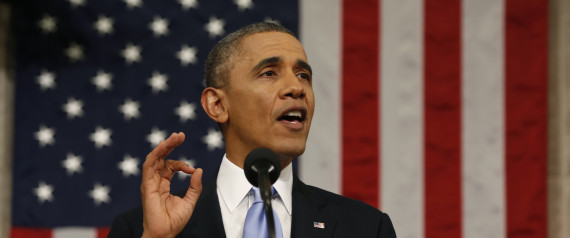
Obama giving State of the Union address in January 2014

If we settle for the "lesser evil" do we want to do something to make it even less evil? How do we do that? And if we don't then aren't we assuring that the evil we settled for will grow to become greater. Maybe in a short time it will get worse than the one we initially had rejected. Or maybe while settled and coddled by the lesser evil the vexation will lead us, irrationally perhaps, to lurch to electing the "greater evil" that will step in inheriting all the powers of the former.

The impending moment for America is a moment of revolting shame, disgust with oneself and self-hatred. Comfortable, self-satisfied we will suddenly realize what price we have paid. Not unlike in Nazi Germany where atrocities and even genocide were justified by the need of the people for safety and comfort - for the "Lebensraum". Here in America we call it American interests abroad, which we are free to defend with lethal force. So said our president to the United Nations last fall. And here we do not prosecute the Jews, but revile corporations that operate for the abominable profit, forgetting conveniently that we ask the government to collude with the largest of them in service of some public interest, and in service of benefits that we have commissioned.

My liberal friends! Please understand that you are asking for your own disempowering. You want the individual to give up some of their power, that is liberty and material means, in favour of the state (typically the US federal government) and then ask the government to return to you benefits obtained in transferring the power into the hands of large corporations. That is how you become serfs and vassals of the state and of the corporation.

Wednesday, October 30, 2013

What is Immunism (not Communism)

It is a great film - "Communism" (youtube about 50 min long) - narrating roughly the marxist theory and its current, and forced, application to our world - about 150 years after the "Communist Manifesto". It has a surprising conclusion about which in a moment.

Much of the film are interviews with lesser and better known intellectuals and luminaries of the world of business. They all can take positions with respect to the merits and demerits of the capitalist system with its centrality of the profit motive. Other significant concepts are those of money and commodity. Money is what makes it all possible and as kind of commodity that enables fluid exchange - one of the speakers admits - it allows for mostly peaceful exchange on a massive scale. Economists refer us to psychology saying that the reason that we wish to acquire things is some spiritual intangible value in them. That is aligned with Marx's insight from long ago that the transformation of an object of nature into commodity, that is for a product that is for sale, imbues it with some quality that is not its own but is imagined by the consumer. From a bag of potatoes to an elegant suit the consumer attaches a "spiritual" value - to a degree so - to his purchase. Marx originates here the idea of fetish. For Marx consumer is a fetishist.

Another challenge posed in the film is the metaphor of the blue and red pill - from the Matrix. Marx, in a cartoon character actually, is offered the choice either of seeing the capitalist system clumsily forge along (the blue pill choice) or the choice of seeing the consequences and true motives of the capitalist system destroy it and usher into an era of communism (the red pill). As we know the communist systems collapsed - almost all of them - and the capitalist system manages to reinvent itself.

The modern advocate of the Marxist condemnation of the capital and the free market is in a difficult situation. I would say he or she does not know how to restate the "Communist Manifesto" in a contemporary form. It is harder and harder to condemn the markets and the system of money for the prosperity it appears to facilitate.

Toward the end there are interesting voices brought into the conversation. First is Slavoj Zizek who says the the production of knowledge became nowadays more important than the production of material goods. But then he says that "knowledge is the antithesis of commodity", because "... when it is shared it even gets bigger." (minute 45) If this is the case then we are leaving the land of scarcity and are happily on a path to abundance - not that it does not bring new yet unknown problems. Still the situation changes drastically and Marxist assumptions are to be abandoned.

Another interesting voice is that of Peter Sloterdijk (minute 47 or so). He talks for "immunism," which he defines as finding basic solidarity against common destruction.
He says that people need to "forge alliance against the lethal." They "... must provide mutual security and offer each other communities of solidarity, even on planetary scale ... because for the first time collective self-destruction is possible". Then, "...before we say communism we must understand the principle of immunism". "...or the principle of our mutual insurance, which is the most profound motive of solidarity."

I have not heard of Peter Sloterdijk before but his observation resounds quite profoundly with me because it is minimalist. That is in the solidarity against destruction of value (i.e. against evil) we seek the most universally common aspects of value to protect - with force and vigor and possibly authority of government. That means that such things will be few. Also the solidarity means that the protection against evil could be offered in individual and community arrangements - entered into and dissolved by free agreement. The current alternatives to Marxist Communism seem to be maximalist - we will take all your freedom and offer you all the goods. I think we ought to strive for a world where we pursue our own goods individually and share with others the pursuit of such goods when we are really really sure they are shared.

Thursday, August 01, 2013

Our troops are defending our benefits

Our troops no longer defend our freedom - they are defending our benefits. We can no longer be proud of their mission. The US has become a global bully defending its interests using military force and secret violent means all over the world. The violence that we unleash in the world is not for our safety but for the stability of the price of oil which allows us to live comfortable lives and drive large cars. We use the inherently coercive nature of government, its monopoly for legal use of violence, to bolster a business model of our lives that we imagine as the only one possible. Since we demand affordable healthcare, free education, cheap gas, well-paying jobs without heeding the intrinsic cost of delivering such goods. Someone has to pay the costs - and in our inability to face them we have shifted that burden away from ourselves on the most powerful player and the most dangerous of them all - the government. In this case the US federal or, shall I say, imperial government.

What shall the government do to pay the cost of our benefits? The obvious thing is to raise taxes and tighten the enforcement of its revenue collection. The other thing is to influence the world around us - China, Japan, Europe - with economic, political and military pressure - to protect what is perceived as the American interest. We went already almost full throttle on that foreign account by unceasing aggression abroad. This is so because the government is acting out its role as the enforcer which we have indeed authorized. The unique privilege of using violence is placed in the hands of government to protect freedom, but we have asked the government to use it to secure the practical, material side of life - to protect our benefits. The practical side of our life is supposed to be secured by peaceful economic process where the government is involved only to assure the honest execution of voluntary transactions.

We have asked the government to use its unique power in a corrupted manner. In the pursuit of the wrong goal.

What will happen next? Or has already happened in consequence? The coercive power of the government is a commodity for sale - today sold to large corporations. They are the suppliers of materials goods the government is to deliver to us as benefits, they are there to make money helping the government fulfill and expand its coercive function. They will be the suppliers of helmets, bullets, tazers, vehicles, prison cells and jailers, intrusive health care, intelligence analysts, data collection facilities, jobs in the security sector. The corporations will also pursue their goals by prodding the government to discipline us as consumers - by enforcing draconian penalties for so-called intellectual-property violations, for any activities perceived as computer fraud even when they might be research projects. The government will intrude into our lives to all the medical and intimate details - when it sees its role as provider of health care it will be an enforcer of compliance with proper health practices. We are already restricted from self-medicating by the intricate system of licensing and drug delivery rules which allows the health care industry and big pharma to rise above us as a cartel. And we are sponsoring that!

People, we are asking the government to kick our collective ass! Wake up! Do we want to be cattle raised for the glory of monstrous organizations which we had initially created to protect us as humans aspiring to life in freedom? Wake up!

Thursday, June 13, 2013

Edward Snowden's act of sacrifice

Indeed, on hearing about Snowden's revelations of NSA domestic spying on US citizens I went on quickly to conclude that there is another hero and a revival of American spirit of freedom is possible and maybe even imminent. But then I hear about the belittling of his person and motives by the likes of Thomas Friedmann and David Brooks as reported on Democracy Now with Amy Goodman. Snowden is also coolly treated by legal scholar (and Obama's academic boss at the University of Chicago) Geoffrey Stone who very strongly argues that he is simply a law breaker and as such would not be tolerated by any government.

On the program of June 12 Chris Hedges, however, argues passionately, that lawbreakers such as Snowden may be heros as they expose other larger crimes committed behind the cover of the law. He speaks in defense of the "act of conscience" and about Snowden and "people who, within systems of power, have a conscience to expose activities by the power elite which are criminal in origin or unconstitutional. And that’s precisely what he did." In response to Stone he says: "When you have a system by which criminals are in power, criminals on Wall Street who are able to carry out massive fraud with no kinds of repercussions or serious regulation or investigation, criminals who torture in our black sites, criminals who carry out targeted assassinations, criminals who lie to the American public to prosecute preemptive war, which under international law is illegal, if you are a strict legalist, as apparently Professor Stone is, what you’re in essence doing is protecting criminal activity. I would argue that in large sections of our government it’s the criminals who are in power."

On the program of June 13, Christopher Pyle, a former whistleblower who exposed illegal government spying on US citizens in the late 60's, argues again in favor of Snowden's actions. Pyle says that Congress has lost the power of oversight because of the terrific degree of dependency on corporate sponsorship of their political office and because of the legal bind in which the secrecy of the object of oversight. Pyle: "Members of Congress do not go to those briefings (on security agencies), even if they’re offered, because once you go to the briefing, then you can’t talk about what you’ve been told, because it’s classified. So the briefing system is designed to silence Congress, not to promote effective oversight." Further: "Members of Congress don’t want to spend time on oversight. They’re too busy raising money. New members of the House of Representatives this winter were told by the Democratic Campaign Committee that they should spend between four and six hours a day dialing for dollars. They have no time to do the public’s business. They’re too busy begging for money. President Obama himself attended 220 fundraisers last year." And he describes the situation of fascist merger between private business and government: "the reason that private contractors get this business is because members of Congress intercede with them with government agencies. And we now have a situation where members of the Intelligence Committee and other committees of Congress intercede with the bureaucracy to get sweetheart contracts for companies that waste taxpayers’ money and also violate the Constitution and the privacy of citizens. This is a very serious situation, because it means that it’s much more difficult to get effective oversight from Congress."

So we have a very serious situation in this country. The government has excused itself from justifying its secret actions ostensibly taken to protect the Constitution. Citizens trying to force the US government to show the legal basis of its actions and would be met with persecution in the name of the law: Espionage Act, etc. The government acts behind the veil of secrecy with legal impunity while the citizenry is to exposed to indiscriminate spying and subject to prosecution. How do we make sure that the government is not exceeding its prerogatives? We can't. Furthermore, we can be sure that it is exceeding its constitutional prerogatives because it is in the grip of corporate, economic influence.

What about Edward Snowden, the low-level employee of Booz Allen Hamilton, a private entity entrusted with the mission of spying on us. He shows us the difference between what is right and what is legal. Sometimes what is legally called for is not right and the law needs to be broken because it is immoral and unjust. It would be better if we just change the law but first those who will reveal the injustice will be sacrificed. It is not the first time.

Wednesday, June 05, 2013

Queer Tango in the eyes of Marta Savigliano

Marta Savigliano is a theorist of dance especially focused on Argentine tango and author of an unusual book - "Tango and the Political Economy of Passion" [Westview Press, 1995]. In that book she describes the mechanisms of that create a structure of power out of the elemental human desire for sexual connection. In the country populated by excess numbers of men women fell into the possession of those who were materially better off while the revenge of the lower class of men was that of capturing the hearts of the scarce group of women by the superiority of the love drama expressed by the figures of tango. Marta Savigliano describes how the product of that "political economy" became an object of admiration of the rest of the world making the tango culture into an exotic good suitable for touristic consumption and for export abroad. The book is an excellent collection of observations that allows us to see tango as a laboratory of heterosexual love relations and their impossibility envisioned by Lacan. One of her most interesting ideas is that of exotic gaze and has ramifications both for Lacanian psychoanalysis and for aesthetic theory. But this is now left aside.

In the article "Notes on Tango (as) Queer (Commodity)" [Anthropological Notebooks, 16(3): p135-143] Marta Savigliano takes on the question of the newly arising phenomenon - that of queer tango, queer milongas (milonga=tango dance event), where apparently the heterosexual pairing paradigm is abandoned. She asks: in favor of what? why would individuals with queer interests seek tango - the quintessential expression of heterosexual love drama? And it even happens in Buenos Aires - the capital of heterosexual polarization through the culture of tango.

In order to answer these questions Savigliano reaches to observations about incidence of same-sex pairings in the classic tango culture. She makes remarks about the male-male tango performances that appear to be more acceptable than the female-female pairing. The first one appears to have a better aesthetic value than the latter. Also male-male tangos never make use of cross dressing and yet deliver an aesthetic value whereas female-female couple looks very much for a masculine sort of lead and quite often generates one - by subtle cross dressing. She explains that by the incompatibility of female alliances with the culture of tango while the men create and uphold the system of power that delivers the women into their embrace. I don't quite agree. To me it seems that male-male tango performance can be aesthetically pleasing because tango as a movement style came out of fights between males where one has to keep an eye on each movement of one's opponent. The impossibility of women's alliances on the tango scene is caused, on the other hand, by the submission to the gaze of men, the sexy dress - the high heels, that deliver the woman, crippled as it were, as a high fetish object into the arms of men, and disqualify her from community with other women.

Explanation for the queer milongas is sought in the interest of newcomers in the formal aspects of tango rather than in an expression of the "political economy of passion". Savigliano says that indeed many newcomers, especially foreigners, are purely aesthetically oriented and are not interested in joining the melodrama of the traditional tango scene. The formula for tango indeed expresses, in my view, a highly original plan of approaching another human being, a new erotic style. These newcomers do not want to submit to the traditional Argentinian "education of desire" into an intensely heterosexually polarized affair. They are attracted to tango by its novel aesthetic and erotic qualities.

However, there are definitely actual homosexual individuals and couples that are attracted to the queer milonga style. This poses the most difficult question - why would they be interested in a cultural environment insistent on the heterosexual separation of gender roles. The author has rather unconvincing answers: "relationality through touch and bodily responsiveness drive their interest in tango." Or "tango queer desires are sensual, aesthetic and romantically playful." If it is so in my view it would point into the direction of a certain dilution or dissipation of desire. But I dont think this is the case. I think queer, homosexual, or sexually ambivalent individuals are attracted to tango because it demonstrates a strong definition of gender roles which is necessary for a robust sexual relation.

In my view tango is a demonstration of the prerequisites for a strong sexual relationship - which is not to say a happy one, but more likely dramatic and conflictual, - one showing the hallmarks of the truth of desire. Savigliano says at the end of the essay: "Queer tango, unmarked by heterosexual tensions,...". Maybe at some level it can be unmarked, but I suspect that queer individuals are attracted to tango precisely in order to be marked with the polarizing male-female gender difference. I do think that the homosexual lifestyle longs for that difference and frequently seeks to regenerate the male-female polarity. It is easily seen among gay and lesbian couples that they desire to produce the gender that is excluded on the basis of anatomic sex. Thus gay couple has one of the men more effeminate and among lesbian couples we typically observe one of the women stepping eagerly into the male role. The desire of homosexual individuals to introduce a fantasy of the excluded sex into their culture cannot be unnoticed. All the drag queen and king shows, as well as many everyday behaviors, testify to the role of the excluded sex as a fantasy in homosexual culture. Tango is another cultural innovation along the path of regenerating the male-female polarization in queer culture.

Monday, January 21, 2013

Americans motivated by fear

I have written about fear in the past - a few years ago. It seems that since then fear as a factor motivating the behavior of Americans has expanded.

At a hip-hop concert one of the rappers wears a T-shirt with text: "Marijuana is safer than alcohol". So now safety is again a major justification. At a gun rally, where people openly carried firearms, someone comments on the experience on facebook: "I never felt safer". I agree with the sentiment for the marijuana as well as for gun rights, yet these minor expressions of the desire for safety are cropping up very frequently nowadays.

These sometimes innocuous expressions of the desire for safety are likely manifestations of a deeper seated issue. That is the issue of fear. Why are people fearful? Where is the threat? Where is the enemy? This sense of fear allows them to tolerate the US government's lethal activities abroad: in Pakistan, Yemen and now Mali. It allows them to tolerate the abuses of and outright attacks on civil liberties - such as spying on US citizen's private communications and even activities in their homes through drone technology, such as the right to indefinite detention and even assassination the President arrogated to himself under NDAA. Americans tolerate unspeakable cruelty of US criminal law that recently drove an admirable young human rights activist - Aaron Swartz - to suicide after he was threatened with 35 years in prison for clearly a victimless crime of improper use of so-called intellectual property. And they tolerate cruelty against immigrants, drug dealers and their often clueless helpers - allowing the prisons to be populated by perpetrators of victimless crimes.

This all is motivated by fear! This happens because we will allow anything that makes us safer! Fearful, rich and heavily armed - we are spending ourselves into the ground and spreading violence and hatred!

Similarly much of the left-liberal agenda is responding to the fear of capitalism and the market system. The free market system has advanced our material well being enormously over the last century. The poor people of today have much more at their disposal than the rich of 100 years ago. Of course we face problems, such as global warming, environmental challenges, health care market issues - but we are capable of facing them. Somehow the left-liberal view is that we are not and must call in the greatest coercive forces around - those of the US government, EU and UN and what not - and police and regulate the free forces of the market. This is condescending as it deprecates the genius of enterprising individuals and values the overbearing inefficiency of the officials.

The impulse for the federal health care mandate is another expression of fear - or anxiety that we as freely cooperating individuals cannot take on the challenges of life, its individual decline and death. Fear that for the challenges of life we will not be able to turn to our fellow humans but will have to rely on the paternal hand of the government. For all the talk about a spiritual renewal of the world among the left-liberals the drive toward government-controlled health care system sounds a loud tone of resignation from the hope for a change of the human heart.

The fear comes from the distrust of the fellow human. Directing all the trust toward the coercive hand of the government leads to violence and decline.

Wednesday, December 12, 2012

Crisis of sexual relations in our culture

Sexual relations in our culture are often decried as severely crippled and even dysfunctional. On one side we hear about the decline of the family while on the other about the impossibility of sustaining a long-term mutual interest between a man and a woman. Yet from other quarters we hear about the decline of community as a result of domination of the market systems in which we objectively function. We plan our future rationally and when that plan rules our life we quite often see no important point of intimate engagement with others. Or others outside of the family which has congealed into a social object of our sexual life. Then we hear about the horrors of rape and other sexual abuse both weighing on those who have suffered it and those who have been accused. And all the while the cultural productions are assailing our imagination with provocations to enjoy more sexual pleasure.

Sexual relation is in its essence an expression of desire to be with, to be together with another human, group of humans, or thing, animal or just oneself. The desire to loosen certain boundaries that constrain our being while we function in society. The sexual desire is at its core a desire for intimacy where certain things do not need to be talked about, do not need to be communicated but can arise. In this sense the closeness of mother and child is realization of sexual desire as is keeping and caring for a pet at home. And of course a powerful and traumatic realization of sexual desire is genital intercourse for which men and women are just wonderfully built. So why the crisis? The crux of the problem is in the transition from communication to intimacy and it's complicated.

There is an unbridgeable gap between men and women - at least this is how it would be stated if we believed that men are made of masculine and women of feminine substance or essence. It has been mythologized in this manner and the proponents of this view make it more acceptable by allowing for example that each of us can assume one or the other substance for a while or for a duration of a certain sexual interaction. Interaction is only properly sexual if there is a good polarization between these substances among the participants. I don't believe that. My views come from psychoanalysis as pioneered by Freud and later formulated by Lacan. Their science of the subjective is very much alive and developing along with support that it receives from clinical practice as well as from philosophy and even mathematics.

The masculine and feminine are certain subjective mental formations into which we are brought up rather than essential substances poured into us in the process of creation. We call these formations genders. Gender is not determined by biological sex although it is a major factor in how the social and family environment guides gender formation. Each individual is different and his/hers gender is not purely masculine or feminine although the individual will typically strongly identify with one. The masculine and feminine are more like two ideal directions or dimensions in space while any particular realization will be a more or less balanced mix of the two. Let us talk about the self-identified feminine as a woman and self-identified masculine as a man. Between such two individuals the sexual impulse is strongest.

Woman has the life, the goods, she feels the fullness of it. Man knows that he does not have that, but knows that he can furnish something that opens up the enjoyment of life. To begin with this is his penis that he protects and is anxious about losing. What does the woman want? What is she lacking? She will first deny that she is lacking anything because she is fullness but then also admit that she does not know what she wants. Actually woman asks to know what she wants, she asks for knowledge that she perceives can be obtained from a man. She needs a man to be herself complete.

Man knows what he does not have. He does have knowledge which is essentially crippled. He seeks to confront the knowledge with the reality of life. He seeks the goods carrying as his gift a stunted version of the knowledge of her gifts. He seeks life that glimmers among the gifts of a woman. In a way man and woman offer each other something they don't really have.

As far as the gifts offered go they unconsciously lie to each other. But as a result they become to each other what they really seek. The having (or not having) is converted into being. The semantic web of communications between man and woman is fraught with lies - for the most part unconsciously produced - because conscious knowledge is partial. The goal of this communication is again paradoxically an overcoming of the communication and stepping up to intimacy - where the gift of life and the gift of knowledge flow together.

This convergence of life and knowledge is love, just that. At that point we are at great altitude and might dispense with investigations of past lies and untruths. Love is what woman demands and man knows he enables.

The crisis in sexual relations is happening along the path toward love between the people who attract each other. The woman asking to know what she wants needs to be properly confronted. She is asking to be seduced and ought to be open to seduction. Judging who should be allowed to seduce her is a difficult judgment call that she can develop only with experience. The man cannot apologize for his attempts to seduce. He will speak to her in terms of her fullness representing to her a fantasy of love that she invariably has. To start with his words and signals cannot be possibly true because - how could he know? Yet speaking and interacting with her he will grow his knowledge specifically of and for her which will ground the possibility of love. He need not apologize for his seductive lies as much as woman does not apologize for her provocative sexual fullness. He need not apologize as long as he is leading her to place where according to his knowledge she wants to be. Being fit to navigate this field of seductive maneuvering is the erotic capacity - and that is where people tend to fail in our culture.

Where does the genital act fit in the course of the process of seduction? Everywhere. A woman should be open to be sexual with an erotically worthy partner. A man should be ready to be sexual with a woman who appears as a map of his knowledge. People should be available to each other.

I was moved to write this article in response to posts complaining about rape being blamed on seemingly nice guys, who got close with girls, became trusted friends and then during some sneaky opportunity, lying down sleepy or drunk, felt entitled to put the penis in the vagina. To me this is a failure of seduction, lack of erotic fitness. A guy who is proceeding along the lines of being a nice guy and a woman's friend and trusted helper is not seducing her into love. He is not presenting himself as the potential bearer of the knowledge - he is being a child and asks her to become a mother. A woman will throw herself at a fulfilling chance of being a mother, but then she treats the "man" not as an erotically worthy partner but as someone who has already fulfilled his sexual role - like a son has to a mother.

Concluding I would say that much of the crisis of sexual relations is due to the failure of openness to seduction, lack of erotic fitness. Seduction is the process of communications, much unconscious and fraught with lies and misperceptions, yet creating the hope for love.

Wednesday, January 25, 2012

State-of-the-Union show is an Infomercial

... for the ruling Democratic/Republican bipartisan machinery. And this infomercial is publically financed - or publically forced - which is the same thing.

The former executive of the Libertarian party hit the point straight home in his comments.

Indeed, FCC with the sanction of the law would excoriate the major media companies for not carrying the show as plain news unpaid by the clear beneficiaries of the infomercial. It would be more beneficial to the nation, definitely less harmful, if the major media used the time to sell some good can openers or hair grease. Then most would know that it is time to turn to alternative media outlets which are abundant and still free of government meddling as long as many of us defend the right to free speech.

With publically financed political campaigns even a small media company - like the one you and me are running - would not survive the official bullying into proving its worth by carrying whatever nonsensical political ideas are cooked up.