America is a product of the European Enlightenment. Of the thought of Diderot, Montesquieu, Voltaire who gave us the idea of human rights partially owing to the earlier thought of John Locke. Enlightenment is the breakthrough that defined the European civilization. It is founded on the assumptions that human reasoning can reach insights and results about how people should be governed. These insights do not come from sources of eternal wisdom - whether they be Christian, Judaic, Muslim or Taoist - or those of "native" peoples. They come from current rational debate that chooses its sources of knowledge on the basis of reason. Knowledge coming down to us as an authoritative teaching of wisdom is to be excluded from participation in the political process. This is especially true of teachings of religious nature. Knowledge influencing the political process and ideologies is to be secular in nature.
America is conflicted about the nature of its civilization - in a way it is an adolescent child of Europe. America has a strongly religious population that professes the Judeo-Christian religious tradition as a founding principle of its political system. I hope America will deal with its religious legacy without a major conflict and resolve it in a manner similar to Europe. Europe has already determined that as a civilization it will not allow religious teachings to determine political choices. Despite, or perhaps due to, much longer religious tradition and religious conflict, Europe has decided, more or less at the end of the 30-year war in 1648, that religion is a matter of private individual choice.
Both America and Europe are getting themselves into a lot of trouble by allowing the settling of large minority populations that profess adherence to varieties of religious beliefs and wish to be governed by principles derived from those beliefs. The adherents of Islam even make the claim that they will never stop to strive for the whole world, or a country or civilization, to be governed by a law flowing from the teaching of Islam. Islam is the religious movement most visibly incompatible with the idea of secular civilization, but other religious ideologies - such as Russian Orthodox or American fundamentalism - should also be viewed with suspicion.
Multiculturalism is the idea that various religious ideologies can be reconciled and find some compromise while being allowed to participate in the political process. In other words that the political power structure can be the result of a compromise between rivaling religious traditions. Multiculturalism has been to a large degree promoted and adopted as a project in the US and Europe - and leads us in a dangerous direction. It leads toward religious conflict and civil war because many religions espouse intransigent totalizing views of the origins of authority and law. A religion, in its essence, is a response to a basic human subjective anxiety of death, a response becoming an institution and an objective source of authority and power. The roots of religious feeling are immensely strong as they reach into this basic existential anxiety and therefore religion is especially dangerous when it is allowed to play a role in the political realm of power.
The achievement of secular civilization is to limit the reach of religion and bar it from entering the realm of temporal power brokering on the national or social scale - known as politics. The discourse over political ideology, of the law, of political figures, of economic choices, artistic expression, - is then allowed to be free. Free from the imposition of totalizing sources of authority which bind us into the basic anxieties of our life. That subjective problem is best dealt with privately or as a matter of private choice in the so-called communities of faith that are free to operate as enclaves within the secular civilization.
This is of course written in the wake of the terrorist attacks against "Charlie Hebdo" on January 7, 2015 (and now after the Copenhagen attacks on Feb 14-15) and after public reaction condemning violence with roots in Islamic religion. Secular civilization that has overwhelming support in Europe and America has of course its implementation problems, identified variously as racism and colonialism, and these can be addressed in the atmosphere of safe public debate, with free speech, free from religious terrorism and other irrational prejudice.
We need to support the secular civilization as it respects religious freedom among other freedoms. Religion needs to respect the secular civilization.
Sunday, February 22, 2015


Sunday, March 16, 2014
Miguel Gutierrez and the mind-body problem
After my first encounter with Miguel Gutierrez's performance art I had to talk about his uniqueness to many around me. I spoke about his courage, about taking actual risks in stage acts and risks in interacting with the audience. And much of what he did was in line with a wonderful statement that I found printed in the program. I extolled it as the best artist's statement I have ever read. Without claim to accuracy I recall that he spoke about the function of art and of performance art specifically. Answering the question why exactly do we want to show ourselves and act in front of the audience - or among the audience or other performers. He gave a brilliant answer: that we want to have a witness to our experience. A witness that reflects to us not our own image but the truth of our experience, validates the experience.
In the latest show, titled "and lose the name of action", - I saw it in Seattle at OnTheBoards March 9, 2014 - he battles the problem of the body being dominated by formal and authoritative systems of knowledge. Miguel apparently responds to the impression made by a close encounter with modern medicine where his own father was treated for a serious illness. Scientists, technologist doctors, patients and perhaps transiently angelic beings populate the stage. The doctors display the mastery that comes from technology based on scientific knowledge, passion for knowledge and dispassionate analytic attitude toward its effects in human world. The angelic beings seem to pray to the absent and unnamed gods. Patients throw fits of indignation about being only objects and just objects and that their rescue depends on their existence being treated on the level of existence of objects of science. Everybody joins in the debate about the nature of experience. Do I respond to heat because it is my experience of heat or because science has defined heat as an objective phenomenon that our brain (an object) is capable of responding to? Miguel's piece contains a very clever dramatization of the so-called mind-body problem. Of course it remains unresolved. The scientists debating it end their discussions with mutual "fuck-you's".
The reason for this impasse is that the patient is unwilling to take charge of his experience and say that he/she is the authority. The patient - that is most of us - will hand himself/herself over to the systems of knowledge asking for salvation. What the system will deliver is a body fragmented and converted into a set of objects that it can manipulate. To defend ourselves from that we must claim the ownership of our subjective life. This is something Miguel has not yet asserted in this show but an inkling of that notion was present in his early days manifesto with the excellent artist statement.
In the latest show, titled "and lose the name of action", - I saw it in Seattle at OnTheBoards March 9, 2014 - he battles the problem of the body being dominated by formal and authoritative systems of knowledge. Miguel apparently responds to the impression made by a close encounter with modern medicine where his own father was treated for a serious illness. Scientists, technologist doctors, patients and perhaps transiently angelic beings populate the stage. The doctors display the mastery that comes from technology based on scientific knowledge, passion for knowledge and dispassionate analytic attitude toward its effects in human world. The angelic beings seem to pray to the absent and unnamed gods. Patients throw fits of indignation about being only objects and just objects and that their rescue depends on their existence being treated on the level of existence of objects of science. Everybody joins in the debate about the nature of experience. Do I respond to heat because it is my experience of heat or because science has defined heat as an objective phenomenon that our brain (an object) is capable of responding to? Miguel's piece contains a very clever dramatization of the so-called mind-body problem. Of course it remains unresolved. The scientists debating it end their discussions with mutual "fuck-you's".
The reason for this impasse is that the patient is unwilling to take charge of his experience and say that he/she is the authority. The patient - that is most of us - will hand himself/herself over to the systems of knowledge asking for salvation. What the system will deliver is a body fragmented and converted into a set of objects that it can manipulate. To defend ourselves from that we must claim the ownership of our subjective life. This is something Miguel has not yet asserted in this show but an inkling of that notion was present in his early days manifesto with the excellent artist statement.
Wednesday, February 26, 2014
America - everyone's imaginary love
There is a lot of love and admiration for America outside of its borders. At the same time Americans in the country are full of dissatisfaction and even outright loathing for the state of the union and its vicious actions abroad. Americans think that they are powerless to change the situation internally and ambivalent about the value of cultures and societal arrangements of foreign countries. They admire the "communities" maintained by materially deprived peoples and are shocked by the rules that restrain individual liberties there.
Lacan has implied in his lectures, quite derisively, that America is sustained by a culture of the imaginary. That individuals dream up their dreams and work to realize them without quite bothering to internalize the meaning of their life and career. You become what you may in the course of pursuing your dream - this is the idea. In other cultures it behooves the individual to validate the course of his career with the society, with the roots where he comes from. His life becomes a sort of service to the society that brought him up, a sort of repaying the debt of being immersed in the Other's view of the world. So that is why when people outside of this country dream their dream is American.
I saw a film a few days ago. A new Belgian film by Felix van Groeningen titled: "The broken circle breakdown", released just late last year 2013. It is about a Belgian Dutch speaking couple involved in a bluegrass band that literally worships American culture - mostly folk and country culture - and their conflict around the death of their daughter who succumbs to leukemia at the age of 7. The film is an homage to the American imaginary way of life even when the main hero rants from the stage against Bush and the religious right who restricted the support for stem cell research. That technology and scientific progress could have saved their daughter or other children in the future. He worships the American country culture with bluegrass music being its pinnacle - yet cannot admit that it expresses the imaginary and naive field of belief in supernatural beings who control our lives. That belief can make its way all the way up the chain of government. He would prefer science to have the control of our lives. Here his woman partner protests - she claim the right to believe whatever she wants (and accords the same right to the naive Americans - so much cultivated in the life of the band). She chooses to unconsciously believe the lies told to her dying daughter about the star that she becomes - a star that shines its rays into the eyes of beings in the future. She believes that the image of the raven will deter the birds from crashing into the glass of the veranda. She blames herself and her partner for the death of her daughter - predicating their faults on scientific theories of hygiene of pregnancy and child rearing. He is closer to the scientific naivete when he tells his dying daughter the story of the star's light surviving its lifespan and giving of light to observers far off in the future. That story soothes the child's dying moment but is totally imaginary. The contradictions in the minds of the adults between what they imagine about themselves and the world and what they are compelled to know and rationally profess are quite apparent and explode in emotional outbursts. The woman commits suicide. While her comatose body is disconnected from life support her husband's band plays a bluegrass "breakdown" tune as a funerary dirge.
Another night I attended an eclectic performance that included two modern art pieces and one traditional presentation of Indian classical dance. It is amazing how much the emotional life and the interactions that observe those are formalized in language. The gesture of dance speaks of what lives in the imagination and expresses itself as emotions. However, the latter are captured in language. In the case of that performance in the language of dance - in gesture. It is anti-expressionistic - the body is harnessed by language.
The solo female dancer ended her performance with an homage to America. She presented the song "God bless America" (or another of those songs of patriotic devotion) in Indian classical dance. It was very interesting and beautiful. However, I felt a certain uneasiness and even horror in the American audience that the performer, an immigrant, did not expect to arouse. The motive of the performer was to express the love and admiration for America and the benefits of its civilization. Americans, the natives of this land foremost, not necessarily "native" Americans - do not feel that admiration and do not have a sense of what this country offers to the world and how much it is loved for it. I felt uneasy too - about the uneasiness of the "born-here" Americans, their cringing at someone from the outside imagining something about them that they do not dare imagine themselves anymore.
Lacan has implied in his lectures, quite derisively, that America is sustained by a culture of the imaginary. That individuals dream up their dreams and work to realize them without quite bothering to internalize the meaning of their life and career. You become what you may in the course of pursuing your dream - this is the idea. In other cultures it behooves the individual to validate the course of his career with the society, with the roots where he comes from. His life becomes a sort of service to the society that brought him up, a sort of repaying the debt of being immersed in the Other's view of the world. So that is why when people outside of this country dream their dream is American.
I saw a film a few days ago. A new Belgian film by Felix van Groeningen titled: "The broken circle breakdown", released just late last year 2013. It is about a Belgian Dutch speaking couple involved in a bluegrass band that literally worships American culture - mostly folk and country culture - and their conflict around the death of their daughter who succumbs to leukemia at the age of 7. The film is an homage to the American imaginary way of life even when the main hero rants from the stage against Bush and the religious right who restricted the support for stem cell research. That technology and scientific progress could have saved their daughter or other children in the future. He worships the American country culture with bluegrass music being its pinnacle - yet cannot admit that it expresses the imaginary and naive field of belief in supernatural beings who control our lives. That belief can make its way all the way up the chain of government. He would prefer science to have the control of our lives. Here his woman partner protests - she claim the right to believe whatever she wants (and accords the same right to the naive Americans - so much cultivated in the life of the band). She chooses to unconsciously believe the lies told to her dying daughter about the star that she becomes - a star that shines its rays into the eyes of beings in the future. She believes that the image of the raven will deter the birds from crashing into the glass of the veranda. She blames herself and her partner for the death of her daughter - predicating their faults on scientific theories of hygiene of pregnancy and child rearing. He is closer to the scientific naivete when he tells his dying daughter the story of the star's light surviving its lifespan and giving of light to observers far off in the future. That story soothes the child's dying moment but is totally imaginary. The contradictions in the minds of the adults between what they imagine about themselves and the world and what they are compelled to know and rationally profess are quite apparent and explode in emotional outbursts. The woman commits suicide. While her comatose body is disconnected from life support her husband's band plays a bluegrass "breakdown" tune as a funerary dirge.
Another night I attended an eclectic performance that included two modern art pieces and one traditional presentation of Indian classical dance. It is amazing how much the emotional life and the interactions that observe those are formalized in language. The gesture of dance speaks of what lives in the imagination and expresses itself as emotions. However, the latter are captured in language. In the case of that performance in the language of dance - in gesture. It is anti-expressionistic - the body is harnessed by language.
The solo female dancer ended her performance with an homage to America. She presented the song "God bless America" (or another of those songs of patriotic devotion) in Indian classical dance. It was very interesting and beautiful. However, I felt a certain uneasiness and even horror in the American audience that the performer, an immigrant, did not expect to arouse. The motive of the performer was to express the love and admiration for America and the benefits of its civilization. Americans, the natives of this land foremost, not necessarily "native" Americans - do not feel that admiration and do not have a sense of what this country offers to the world and how much it is loved for it. I felt uneasy too - about the uneasiness of the "born-here" Americans, their cringing at someone from the outside imagining something about them that they do not dare imagine themselves anymore.
Wednesday, January 29, 2014
To my left-liberal friends
Why is it a "lesser evil" - if it kills every day scores of innocents abroad under the guise of the war on terror? Was Reagan's expansion of the US nuclear weapons program a "greater" evil - even when those weapons did not kill a single person? The "lesser" weapons of Obama kill many more.
And if you think that this is a "lesser" evil - is not opposing it the right thing to do? Or at least exerting political pressure and a pressure of public opinion so that this evil we elected to live with is diminished every day?
I think we all know that the fight to reduce even the "lesser" of evils is the right thing to do but yet we do not do it. Why? Oh why!!!
Because we have bought into the party of evil - the lesser one that it may be. We have something to gain by cooperating and by not obstructing the path of power. We want to hold on to power ourselves, to the portion of power that we released into the hands of our government. We want minor aspects of power, aspects of it that we could have held ourselves by our industrious efforts, but we preferred to become subsidiaries of a greater power, a power luckily deemed to still be a lesser evil.
We wanted to be safe: from the risk of illness, from an occasional wacko with a gun, extremely safe on an airplane trip, safe in a steady job and prosperous retirement, be assured that our food and drugs are superbly safe too. To arrive at these ends we call on the coercive hand of the government to weigh in. As if we could not achieve most of those safeties and comforts through our own free and peaceful arrangements - or our own sovereign powers if need be. We want to be nannied and coddled - preferably by a "lesser evil" power.
The dissonance between allowing ourselves to be cared for by a ruthless power of the state and our own aspirations of creating our own life in honesty and peace will be soon felt. This hollowing of our soul will be felt mostly when we lose the sovereignty of our own power and will only ask for the subsidiary powers as servile subjects of the state. When we try to shake off the servility we will be punished. That is the nature of the "lesser evil". Do you want that?
Do you want to condone any sort of policy - violent, militaristic, criminal - to protect the government because you already bought goods and services from it? Did this man sell you stuff and now you are protecting him to ensure the delivery?
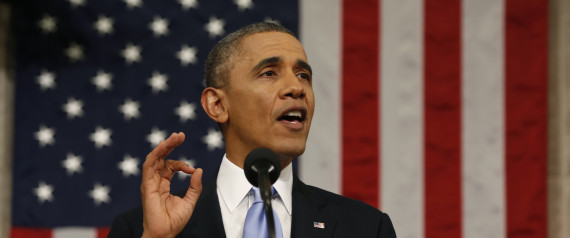 |
| Obama giving State of the Union address in January 2014 |
If we settle for the "lesser evil" do we want to do something to make it even less evil? How do we do that? And if we don't then aren't we assuring that the evil we settled for will grow to become greater. Maybe in a short time it will get worse than the one we initially had rejected. Or maybe while settled and coddled by the lesser evil the vexation will lead us, irrationally perhaps, to lurch to electing the "greater evil" that will step in inheriting all the powers of the former.
The impending moment for America is a moment of revolting shame, disgust with oneself and self-hatred. Comfortable, self-satisfied we will suddenly realize what price we have paid. Not unlike in Nazi Germany where atrocities and even genocide were justified by the need of the people for safety and comfort - for the "Lebensraum". Here in America we call it American interests abroad, which we are free to defend with lethal force. So said our president to the United Nations last fall. And here we do not prosecute the Jews, but revile corporations that operate for the abominable profit, forgetting conveniently that we ask the government to collude with the largest of them in service of some public interest, and in service of benefits that we have commissioned.
My liberal friends! Please understand that you are asking for your own disempowering. You want the individual to give up some of their power, that is liberty and material means, in favour of the state (typically the US federal government) and then ask the government to return to you benefits obtained in transferring the power into the hands of large corporations. That is how you become serfs and vassals of the state and of the corporation.
Wednesday, October 30, 2013
What is Immunism (not Communism)
It is a great film - "Communism" (youtube about 50 min long) - narrating roughly the marxist theory and its current, and forced, application to our world - about 150 years after the "Communist Manifesto". It has a surprising conclusion about which in a moment.
Much of the film are interviews with lesser and better known intellectuals and luminaries of the world of business. They all can take positions with respect to the merits and demerits of the capitalist system with its centrality of the profit motive. Other significant concepts are those of money and commodity. Money is what makes it all possible and as kind of commodity that enables fluid exchange - one of the speakers admits - it allows for mostly peaceful exchange on a massive scale. Economists refer us to psychology saying that the reason that we wish to acquire things is some spiritual intangible value in them. That is aligned with Marx's insight from long ago that the transformation of an object of nature into commodity, that is for a product that is for sale, imbues it with some quality that is not its own but is imagined by the consumer. From a bag of potatoes to an elegant suit the consumer attaches a "spiritual" value - to a degree so - to his purchase. Marx originates here the idea of fetish. For Marx consumer is a fetishist.
Another challenge posed in the film is the metaphor of the blue and red pill - from the Matrix. Marx, in a cartoon character actually, is offered the choice either of seeing the capitalist system clumsily forge along (the blue pill choice) or the choice of seeing the consequences and true motives of the capitalist system destroy it and usher into an era of communism (the red pill). As we know the communist systems collapsed - almost all of them - and the capitalist system manages to reinvent itself.
The modern advocate of the Marxist condemnation of the capital and the free market is in a difficult situation. I would say he or she does not know how to restate the "Communist Manifesto" in a contemporary form. It is harder and harder to condemn the markets and the system of money for the prosperity it appears to facilitate.
Toward the end there are interesting voices brought into the conversation. First is Slavoj Zizek who says the the production of knowledge became nowadays more important than the production of material goods. But then he says that "knowledge is the antithesis of commodity", because "... when it is shared it even gets bigger." (minute 45) If this is the case then we are leaving the land of scarcity and are happily on a path to abundance - not that it does not bring new yet unknown problems. Still the situation changes drastically and Marxist assumptions are to be abandoned.
Another interesting voice is that of Peter Sloterdijk (minute 47 or so). He talks for "immunism," which he defines as finding basic solidarity against common destruction.
He says that people need to "forge alliance against the lethal." They "... must provide mutual security and offer each other communities of solidarity, even on planetary scale ... because for the first time collective self-destruction is possible". Then, "...before we say communism we must understand the principle of immunism". "...or the principle of our mutual insurance, which is the most profound motive of solidarity."
I have not heard of Peter Sloterdijk before but his observation resounds quite profoundly with me because it is minimalist. That is in the solidarity against destruction of value (i.e. against evil) we seek the most universally common aspects of value to protect - with force and vigor and possibly authority of government. That means that such things will be few. Also the solidarity means that the protection against evil could be offered in individual and community arrangements - entered into and dissolved by free agreement. The current alternatives to Marxist Communism seem to be maximalist - we will take all your freedom and offer you all the goods. I think we ought to strive for a world where we pursue our own goods individually and share with others the pursuit of such goods when we are really really sure they are shared.
Much of the film are interviews with lesser and better known intellectuals and luminaries of the world of business. They all can take positions with respect to the merits and demerits of the capitalist system with its centrality of the profit motive. Other significant concepts are those of money and commodity. Money is what makes it all possible and as kind of commodity that enables fluid exchange - one of the speakers admits - it allows for mostly peaceful exchange on a massive scale. Economists refer us to psychology saying that the reason that we wish to acquire things is some spiritual intangible value in them. That is aligned with Marx's insight from long ago that the transformation of an object of nature into commodity, that is for a product that is for sale, imbues it with some quality that is not its own but is imagined by the consumer. From a bag of potatoes to an elegant suit the consumer attaches a "spiritual" value - to a degree so - to his purchase. Marx originates here the idea of fetish. For Marx consumer is a fetishist.
Another challenge posed in the film is the metaphor of the blue and red pill - from the Matrix. Marx, in a cartoon character actually, is offered the choice either of seeing the capitalist system clumsily forge along (the blue pill choice) or the choice of seeing the consequences and true motives of the capitalist system destroy it and usher into an era of communism (the red pill). As we know the communist systems collapsed - almost all of them - and the capitalist system manages to reinvent itself.
The modern advocate of the Marxist condemnation of the capital and the free market is in a difficult situation. I would say he or she does not know how to restate the "Communist Manifesto" in a contemporary form. It is harder and harder to condemn the markets and the system of money for the prosperity it appears to facilitate.
Toward the end there are interesting voices brought into the conversation. First is Slavoj Zizek who says the the production of knowledge became nowadays more important than the production of material goods. But then he says that "knowledge is the antithesis of commodity", because "... when it is shared it even gets bigger." (minute 45) If this is the case then we are leaving the land of scarcity and are happily on a path to abundance - not that it does not bring new yet unknown problems. Still the situation changes drastically and Marxist assumptions are to be abandoned.
Another interesting voice is that of Peter Sloterdijk (minute 47 or so). He talks for "immunism," which he defines as finding basic solidarity against common destruction.
He says that people need to "forge alliance against the lethal." They "... must provide mutual security and offer each other communities of solidarity, even on planetary scale ... because for the first time collective self-destruction is possible". Then, "...before we say communism we must understand the principle of immunism". "...or the principle of our mutual insurance, which is the most profound motive of solidarity."
I have not heard of Peter Sloterdijk before but his observation resounds quite profoundly with me because it is minimalist. That is in the solidarity against destruction of value (i.e. against evil) we seek the most universally common aspects of value to protect - with force and vigor and possibly authority of government. That means that such things will be few. Also the solidarity means that the protection against evil could be offered in individual and community arrangements - entered into and dissolved by free agreement. The current alternatives to Marxist Communism seem to be maximalist - we will take all your freedom and offer you all the goods. I think we ought to strive for a world where we pursue our own goods individually and share with others the pursuit of such goods when we are really really sure they are shared.
Thursday, August 01, 2013
Our troops are defending our benefits
Our troops no longer defend our freedom - they are defending our benefits. We can no longer be proud of their mission. The US has become a global bully defending its interests using military force and secret violent means all over the world. The violence that we unleash in the world is not for our safety but for the stability of the price of oil which allows us to live comfortable lives and drive large cars. We use the inherently coercive nature of government, its monopoly for legal use of violence, to bolster a business model of our lives that we imagine as the only one possible. Since we demand affordable healthcare, free education, cheap gas, well-paying jobs without heeding the intrinsic cost of delivering such goods. Someone has to pay the costs - and in our inability to face them we have shifted that burden away from ourselves on the most powerful player and the most dangerous of them all - the government. In this case the US federal or, shall I say, imperial government.
What shall the government do to pay the cost of our benefits? The obvious thing is to raise taxes and tighten the enforcement of its revenue collection. The other thing is to influence the world around us - China, Japan, Europe - with economic, political and military pressure - to protect what is perceived as the American interest. We went already almost full throttle on that foreign account by unceasing aggression abroad. This is so because the government is acting out its role as the enforcer which we have indeed authorized. The unique privilege of using violence is placed in the hands of government to protect freedom, but we have asked the government to use it to secure the practical, material side of life - to protect our benefits. The practical side of our life is supposed to be secured by peaceful economic process where the government is involved only to assure the honest execution of voluntary transactions.
We have asked the government to use its unique power in a corrupted manner. In the pursuit of the wrong goal.
What will happen next? Or has already happened in consequence? The coercive power of the government is a commodity for sale - today sold to large corporations. They are the suppliers of materials goods the government is to deliver to us as benefits, they are there to make money helping the government fulfill and expand its coercive function. They will be the suppliers of helmets, bullets, tazers, vehicles, prison cells and jailers, intrusive health care, intelligence analysts, data collection facilities, jobs in the security sector. The corporations will also pursue their goals by prodding the government to discipline us as consumers - by enforcing draconian penalties for so-called intellectual-property violations, for any activities perceived as computer fraud even when they might be research projects. The government will intrude into our lives to all the medical and intimate details - when it sees its role as provider of health care it will be an enforcer of compliance with proper health practices. We are already restricted from self-medicating by the intricate system of licensing and drug delivery rules which allows the health care industry and big pharma to rise above us as a cartel. And we are sponsoring that!
People, we are asking the government to kick our collective ass! Wake up! Do we want to be cattle raised for the glory of monstrous organizations which we had initially created to protect us as humans aspiring to life in freedom? Wake up!
What shall the government do to pay the cost of our benefits? The obvious thing is to raise taxes and tighten the enforcement of its revenue collection. The other thing is to influence the world around us - China, Japan, Europe - with economic, political and military pressure - to protect what is perceived as the American interest. We went already almost full throttle on that foreign account by unceasing aggression abroad. This is so because the government is acting out its role as the enforcer which we have indeed authorized. The unique privilege of using violence is placed in the hands of government to protect freedom, but we have asked the government to use it to secure the practical, material side of life - to protect our benefits. The practical side of our life is supposed to be secured by peaceful economic process where the government is involved only to assure the honest execution of voluntary transactions.
We have asked the government to use its unique power in a corrupted manner. In the pursuit of the wrong goal.
What will happen next? Or has already happened in consequence? The coercive power of the government is a commodity for sale - today sold to large corporations. They are the suppliers of materials goods the government is to deliver to us as benefits, they are there to make money helping the government fulfill and expand its coercive function. They will be the suppliers of helmets, bullets, tazers, vehicles, prison cells and jailers, intrusive health care, intelligence analysts, data collection facilities, jobs in the security sector. The corporations will also pursue their goals by prodding the government to discipline us as consumers - by enforcing draconian penalties for so-called intellectual-property violations, for any activities perceived as computer fraud even when they might be research projects. The government will intrude into our lives to all the medical and intimate details - when it sees its role as provider of health care it will be an enforcer of compliance with proper health practices. We are already restricted from self-medicating by the intricate system of licensing and drug delivery rules which allows the health care industry and big pharma to rise above us as a cartel. And we are sponsoring that!
People, we are asking the government to kick our collective ass! Wake up! Do we want to be cattle raised for the glory of monstrous organizations which we had initially created to protect us as humans aspiring to life in freedom? Wake up!
Thursday, June 13, 2013
Edward Snowden's act of sacrifice
Indeed, on hearing about Snowden's revelations of NSA domestic spying on US citizens I went on quickly to conclude that there is another hero and a revival of American spirit of freedom is possible and maybe even imminent. But then I hear about the belittling of his person and motives by the likes of Thomas Friedmann and David Brooks as reported on Democracy Now with Amy Goodman. Snowden is also coolly treated by legal scholar (and Obama's academic boss at the University of Chicago) Geoffrey Stone who very strongly argues that he is simply a law breaker and as such would not be tolerated by any government.
On the program of June 12 Chris Hedges, however, argues passionately, that lawbreakers such as Snowden may be heros as they expose other larger crimes committed behind the cover of the law. He speaks in defense of the "act of conscience" and about Snowden and "people who, within systems of power, have a conscience to expose activities by the power elite which are criminal in origin or unconstitutional. And that’s precisely what he did." In response to Stone he says: "When you have a system by which criminals are in power, criminals on Wall Street who are able to carry out massive fraud with no kinds of repercussions or serious regulation or investigation, criminals who torture in our black sites, criminals who carry out targeted assassinations, criminals who lie to the American public to prosecute preemptive war, which under international law is illegal, if you are a strict legalist, as apparently Professor Stone is, what you’re in essence doing is protecting criminal activity. I would argue that in large sections of our government it’s the criminals who are in power."
On the program of June 13, Christopher Pyle, a former whistleblower who exposed illegal government spying on US citizens in the late 60's, argues again in favor of Snowden's actions. Pyle says that Congress has lost the power of oversight because of the terrific degree of dependency on corporate sponsorship of their political office and because of the legal bind in which the secrecy of the object of oversight. Pyle: "Members of Congress do not go to those briefings (on security agencies), even if they’re offered, because once you go to the briefing, then you can’t talk about what you’ve been told, because it’s classified. So the briefing system is designed to silence Congress, not to promote effective oversight." Further: "Members of Congress don’t want to spend time on oversight. They’re too busy raising money. New members of the House of Representatives this winter were told by the Democratic Campaign Committee that they should spend between four and six hours a day dialing for dollars. They have no time to do the public’s business. They’re too busy begging for money. President Obama himself attended 220 fundraisers last year." And he describes the situation of fascist merger between private business and government: "the reason that private contractors get this business is because members of Congress intercede with them with government agencies. And we now have a situation where members of the Intelligence Committee and other committees of Congress intercede with the bureaucracy to get sweetheart contracts for companies that waste taxpayers’ money and also violate the Constitution and the privacy of citizens. This is a very serious situation, because it means that it’s much more difficult to get effective oversight from Congress."
So we have a very serious situation in this country. The government has excused itself from justifying its secret actions ostensibly taken to protect the Constitution. Citizens trying to force the US government to show the legal basis of its actions and would be met with persecution in the name of the law: Espionage Act, etc. The government acts behind the veil of secrecy with legal impunity while the citizenry is to exposed to indiscriminate spying and subject to prosecution. How do we make sure that the government is not exceeding its prerogatives? We can't. Furthermore, we can be sure that it is exceeding its constitutional prerogatives because it is in the grip of corporate, economic influence.
What about Edward Snowden, the low-level employee of Booz Allen Hamilton, a private entity entrusted with the mission of spying on us. He shows us the difference between what is right and what is legal. Sometimes what is legally called for is not right and the law needs to be broken because it is immoral and unjust. It would be better if we just change the law but first those who will reveal the injustice will be sacrificed. It is not the first time.
On the program of June 12 Chris Hedges, however, argues passionately, that lawbreakers such as Snowden may be heros as they expose other larger crimes committed behind the cover of the law. He speaks in defense of the "act of conscience" and about Snowden and "people who, within systems of power, have a conscience to expose activities by the power elite which are criminal in origin or unconstitutional. And that’s precisely what he did." In response to Stone he says: "When you have a system by which criminals are in power, criminals on Wall Street who are able to carry out massive fraud with no kinds of repercussions or serious regulation or investigation, criminals who torture in our black sites, criminals who carry out targeted assassinations, criminals who lie to the American public to prosecute preemptive war, which under international law is illegal, if you are a strict legalist, as apparently Professor Stone is, what you’re in essence doing is protecting criminal activity. I would argue that in large sections of our government it’s the criminals who are in power."
On the program of June 13, Christopher Pyle, a former whistleblower who exposed illegal government spying on US citizens in the late 60's, argues again in favor of Snowden's actions. Pyle says that Congress has lost the power of oversight because of the terrific degree of dependency on corporate sponsorship of their political office and because of the legal bind in which the secrecy of the object of oversight. Pyle: "Members of Congress do not go to those briefings (on security agencies), even if they’re offered, because once you go to the briefing, then you can’t talk about what you’ve been told, because it’s classified. So the briefing system is designed to silence Congress, not to promote effective oversight." Further: "Members of Congress don’t want to spend time on oversight. They’re too busy raising money. New members of the House of Representatives this winter were told by the Democratic Campaign Committee that they should spend between four and six hours a day dialing for dollars. They have no time to do the public’s business. They’re too busy begging for money. President Obama himself attended 220 fundraisers last year." And he describes the situation of fascist merger between private business and government: "the reason that private contractors get this business is because members of Congress intercede with them with government agencies. And we now have a situation where members of the Intelligence Committee and other committees of Congress intercede with the bureaucracy to get sweetheart contracts for companies that waste taxpayers’ money and also violate the Constitution and the privacy of citizens. This is a very serious situation, because it means that it’s much more difficult to get effective oversight from Congress."
So we have a very serious situation in this country. The government has excused itself from justifying its secret actions ostensibly taken to protect the Constitution. Citizens trying to force the US government to show the legal basis of its actions and would be met with persecution in the name of the law: Espionage Act, etc. The government acts behind the veil of secrecy with legal impunity while the citizenry is to exposed to indiscriminate spying and subject to prosecution. How do we make sure that the government is not exceeding its prerogatives? We can't. Furthermore, we can be sure that it is exceeding its constitutional prerogatives because it is in the grip of corporate, economic influence.
What about Edward Snowden, the low-level employee of Booz Allen Hamilton, a private entity entrusted with the mission of spying on us. He shows us the difference between what is right and what is legal. Sometimes what is legally called for is not right and the law needs to be broken because it is immoral and unjust. It would be better if we just change the law but first those who will reveal the injustice will be sacrificed. It is not the first time.
Wednesday, June 05, 2013
Queer Tango in the eyes of Marta Savigliano
Marta Savigliano is a theorist of dance especially focused on Argentine tango and author of an unusual book - "Tango and the Political Economy of Passion" [Westview Press, 1995]. In that book she describes the mechanisms of that create a structure of power out of the elemental human desire for sexual connection. In the country populated by excess numbers of men women fell into the possession of those who were materially better off while the revenge of the lower class of men was that of capturing the hearts of the scarce group of women by the superiority of the love drama expressed by the figures of tango. Marta Savigliano describes how the product of that "political economy" became an object of admiration of the rest of the world making the tango culture into an exotic good suitable for touristic consumption and for export abroad. The book is an excellent collection of observations that allows us to see tango as a laboratory of heterosexual love relations and their impossibility envisioned by Lacan. One of her most interesting ideas is that of exotic gaze and has ramifications both for Lacanian psychoanalysis and for aesthetic theory. But this is now left aside.
In the article "Notes on Tango (as) Queer (Commodity)" [Anthropological Notebooks, 16(3): p135-143] Marta Savigliano takes on the question of the newly arising phenomenon - that of queer tango, queer milongas (milonga=tango dance event), where apparently the heterosexual pairing paradigm is abandoned. She asks: in favor of what? why would individuals with queer interests seek tango - the quintessential expression of heterosexual love drama? And it even happens in Buenos Aires - the capital of heterosexual polarization through the culture of tango.
In order to answer these questions Savigliano reaches to observations about incidence of same-sex pairings in the classic tango culture. She makes remarks about the male-male tango performances that appear to be more acceptable than the female-female pairing. The first one appears to have a better aesthetic value than the latter. Also male-male tangos never make use of cross dressing and yet deliver an aesthetic value whereas female-female couple looks very much for a masculine sort of lead and quite often generates one - by subtle cross dressing. She explains that by the incompatibility of female alliances with the culture of tango while the men create and uphold the system of power that delivers the women into their embrace. I don't quite agree. To me it seems that male-male tango performance can be aesthetically pleasing because tango as a movement style came out of fights between males where one has to keep an eye on each movement of one's opponent. The impossibility of women's alliances on the tango scene is caused, on the other hand, by the submission to the gaze of men, the sexy dress - the high heels, that deliver the woman, crippled as it were, as a high fetish object into the arms of men, and disqualify her from community with other women.
Explanation for the queer milongas is sought in the interest of newcomers in the formal aspects of tango rather than in an expression of the "political economy of passion". Savigliano says that indeed many newcomers, especially foreigners, are purely aesthetically oriented and are not interested in joining the melodrama of the traditional tango scene. The formula for tango indeed expresses, in my view, a highly original plan of approaching another human being, a new erotic style. These newcomers do not want to submit to the traditional Argentinian "education of desire" into an intensely heterosexually polarized affair. They are attracted to tango by its novel aesthetic and erotic qualities.
However, there are definitely actual homosexual individuals and couples that are attracted to the queer milonga style. This poses the most difficult question - why would they be interested in a cultural environment insistent on the heterosexual separation of gender roles. The author has rather unconvincing answers: "relationality through touch and bodily responsiveness drive their interest in tango." Or "tango queer desires are sensual, aesthetic and romantically playful." If it is so in my view it would point into the direction of a certain dilution or dissipation of desire. But I dont think this is the case. I think queer, homosexual, or sexually ambivalent individuals are attracted to tango because it demonstrates a strong definition of gender roles which is necessary for a robust sexual relation.
In my view tango is a demonstration of the prerequisites for a strong sexual relationship - which is not to say a happy one, but more likely dramatic and conflictual, - one showing the hallmarks of the truth of desire. Savigliano says at the end of the essay: "Queer tango, unmarked by heterosexual tensions,...". Maybe at some level it can be unmarked, but I suspect that queer individuals are attracted to tango precisely in order to be marked with the polarizing male-female gender difference. I do think that the homosexual lifestyle longs for that difference and frequently seeks to regenerate the male-female polarity. It is easily seen among gay and lesbian couples that they desire to produce the gender that is excluded on the basis of anatomic sex. Thus gay couple has one of the men more effeminate and among lesbian couples we typically observe one of the women stepping eagerly into the male role. The desire of homosexual individuals to introduce a fantasy of the excluded sex into their culture cannot be unnoticed. All the drag queen and king shows, as well as many everyday behaviors, testify to the role of the excluded sex as a fantasy in homosexual culture. Tango is another cultural innovation along the path of regenerating the male-female polarization in queer culture.
In the article "Notes on Tango (as) Queer (Commodity)" [Anthropological Notebooks, 16(3): p135-143] Marta Savigliano takes on the question of the newly arising phenomenon - that of queer tango, queer milongas (milonga=tango dance event), where apparently the heterosexual pairing paradigm is abandoned. She asks: in favor of what? why would individuals with queer interests seek tango - the quintessential expression of heterosexual love drama? And it even happens in Buenos Aires - the capital of heterosexual polarization through the culture of tango.
In order to answer these questions Savigliano reaches to observations about incidence of same-sex pairings in the classic tango culture. She makes remarks about the male-male tango performances that appear to be more acceptable than the female-female pairing. The first one appears to have a better aesthetic value than the latter. Also male-male tangos never make use of cross dressing and yet deliver an aesthetic value whereas female-female couple looks very much for a masculine sort of lead and quite often generates one - by subtle cross dressing. She explains that by the incompatibility of female alliances with the culture of tango while the men create and uphold the system of power that delivers the women into their embrace. I don't quite agree. To me it seems that male-male tango performance can be aesthetically pleasing because tango as a movement style came out of fights between males where one has to keep an eye on each movement of one's opponent. The impossibility of women's alliances on the tango scene is caused, on the other hand, by the submission to the gaze of men, the sexy dress - the high heels, that deliver the woman, crippled as it were, as a high fetish object into the arms of men, and disqualify her from community with other women.
Explanation for the queer milongas is sought in the interest of newcomers in the formal aspects of tango rather than in an expression of the "political economy of passion". Savigliano says that indeed many newcomers, especially foreigners, are purely aesthetically oriented and are not interested in joining the melodrama of the traditional tango scene. The formula for tango indeed expresses, in my view, a highly original plan of approaching another human being, a new erotic style. These newcomers do not want to submit to the traditional Argentinian "education of desire" into an intensely heterosexually polarized affair. They are attracted to tango by its novel aesthetic and erotic qualities.
However, there are definitely actual homosexual individuals and couples that are attracted to the queer milonga style. This poses the most difficult question - why would they be interested in a cultural environment insistent on the heterosexual separation of gender roles. The author has rather unconvincing answers: "relationality through touch and bodily responsiveness drive their interest in tango." Or "tango queer desires are sensual, aesthetic and romantically playful." If it is so in my view it would point into the direction of a certain dilution or dissipation of desire. But I dont think this is the case. I think queer, homosexual, or sexually ambivalent individuals are attracted to tango because it demonstrates a strong definition of gender roles which is necessary for a robust sexual relation.
In my view tango is a demonstration of the prerequisites for a strong sexual relationship - which is not to say a happy one, but more likely dramatic and conflictual, - one showing the hallmarks of the truth of desire. Savigliano says at the end of the essay: "Queer tango, unmarked by heterosexual tensions,...". Maybe at some level it can be unmarked, but I suspect that queer individuals are attracted to tango precisely in order to be marked with the polarizing male-female gender difference. I do think that the homosexual lifestyle longs for that difference and frequently seeks to regenerate the male-female polarity. It is easily seen among gay and lesbian couples that they desire to produce the gender that is excluded on the basis of anatomic sex. Thus gay couple has one of the men more effeminate and among lesbian couples we typically observe one of the women stepping eagerly into the male role. The desire of homosexual individuals to introduce a fantasy of the excluded sex into their culture cannot be unnoticed. All the drag queen and king shows, as well as many everyday behaviors, testify to the role of the excluded sex as a fantasy in homosexual culture. Tango is another cultural innovation along the path of regenerating the male-female polarization in queer culture.
Monday, January 21, 2013
Americans motivated by fear
I have written about fear in the past - a few years ago. It seems that since then fear as a factor motivating the behavior of Americans has expanded.
At a hip-hop concert one of the rappers wears a T-shirt with text: "Marijuana is safer than alcohol". So now safety is again a major justification. At a gun rally, where people openly carried firearms, someone comments on the experience on facebook: "I never felt safer". I agree with the sentiment for the marijuana as well as for gun rights, yet these minor expressions of the desire for safety are cropping up very frequently nowadays.
These sometimes innocuous expressions of the desire for safety are likely manifestations of a deeper seated issue. That is the issue of fear. Why are people fearful? Where is the threat? Where is the enemy? This sense of fear allows them to tolerate the US government's lethal activities abroad: in Pakistan, Yemen and now Mali. It allows them to tolerate the abuses of and outright attacks on civil liberties - such as spying on US citizen's private communications and even activities in their homes through drone technology, such as the right to indefinite detention and even assassination the President arrogated to himself under NDAA. Americans tolerate unspeakable cruelty of US criminal law that recently drove an admirable young human rights activist - Aaron Swartz - to suicide after he was threatened with 35 years in prison for clearly a victimless crime of improper use of so-called intellectual property. And they tolerate cruelty against immigrants, drug dealers and their often clueless helpers - allowing the prisons to be populated by perpetrators of victimless crimes.
This all is motivated by fear! This happens because we will allow anything that makes us safer! Fearful, rich and heavily armed - we are spending ourselves into the ground and spreading violence and hatred!
Similarly much of the left-liberal agenda is responding to the fear of capitalism and the market system. The free market system has advanced our material well being enormously over the last century. The poor people of today have much more at their disposal than the rich of 100 years ago. Of course we face problems, such as global warming, environmental challenges, health care market issues - but we are capable of facing them. Somehow the left-liberal view is that we are not and must call in the greatest coercive forces around - those of the US government, EU and UN and what not - and police and regulate the free forces of the market. This is condescending as it deprecates the genius of enterprising individuals and values the overbearing inefficiency of the officials.
The impulse for the federal health care mandate is another expression of fear - or anxiety that we as freely cooperating individuals cannot take on the challenges of life, its individual decline and death. Fear that for the challenges of life we will not be able to turn to our fellow humans but will have to rely on the paternal hand of the government. For all the talk about a spiritual renewal of the world among the left-liberals the drive toward government-controlled health care system sounds a loud tone of resignation from the hope for a change of the human heart.
The fear comes from the distrust of the fellow human. Directing all the trust toward the coercive hand of the government leads to violence and decline.
At a hip-hop concert one of the rappers wears a T-shirt with text: "Marijuana is safer than alcohol". So now safety is again a major justification. At a gun rally, where people openly carried firearms, someone comments on the experience on facebook: "I never felt safer". I agree with the sentiment for the marijuana as well as for gun rights, yet these minor expressions of the desire for safety are cropping up very frequently nowadays.
These sometimes innocuous expressions of the desire for safety are likely manifestations of a deeper seated issue. That is the issue of fear. Why are people fearful? Where is the threat? Where is the enemy? This sense of fear allows them to tolerate the US government's lethal activities abroad: in Pakistan, Yemen and now Mali. It allows them to tolerate the abuses of and outright attacks on civil liberties - such as spying on US citizen's private communications and even activities in their homes through drone technology, such as the right to indefinite detention and even assassination the President arrogated to himself under NDAA. Americans tolerate unspeakable cruelty of US criminal law that recently drove an admirable young human rights activist - Aaron Swartz - to suicide after he was threatened with 35 years in prison for clearly a victimless crime of improper use of so-called intellectual property. And they tolerate cruelty against immigrants, drug dealers and their often clueless helpers - allowing the prisons to be populated by perpetrators of victimless crimes.
This all is motivated by fear! This happens because we will allow anything that makes us safer! Fearful, rich and heavily armed - we are spending ourselves into the ground and spreading violence and hatred!
Similarly much of the left-liberal agenda is responding to the fear of capitalism and the market system. The free market system has advanced our material well being enormously over the last century. The poor people of today have much more at their disposal than the rich of 100 years ago. Of course we face problems, such as global warming, environmental challenges, health care market issues - but we are capable of facing them. Somehow the left-liberal view is that we are not and must call in the greatest coercive forces around - those of the US government, EU and UN and what not - and police and regulate the free forces of the market. This is condescending as it deprecates the genius of enterprising individuals and values the overbearing inefficiency of the officials.
The impulse for the federal health care mandate is another expression of fear - or anxiety that we as freely cooperating individuals cannot take on the challenges of life, its individual decline and death. Fear that for the challenges of life we will not be able to turn to our fellow humans but will have to rely on the paternal hand of the government. For all the talk about a spiritual renewal of the world among the left-liberals the drive toward government-controlled health care system sounds a loud tone of resignation from the hope for a change of the human heart.
The fear comes from the distrust of the fellow human. Directing all the trust toward the coercive hand of the government leads to violence and decline.
Wednesday, December 12, 2012
Crisis of sexual relations in our culture
Sexual relations in our culture are often decried as severely crippled and even dysfunctional. On one side we hear about the decline of the family while on the other about the impossibility of sustaining a long-term mutual interest between a man and a woman. Yet from other quarters we hear about the decline of community as a result of domination of the market systems in which we objectively function. We plan our future rationally and when that plan rules our life we quite often see no important point of intimate engagement with others. Or others outside of the family which has congealed into a social object of our sexual life. Then we hear about the horrors of rape and other sexual abuse both weighing on those who have suffered it and those who have been accused. And all the while the cultural productions are assailing our imagination with provocations to enjoy more sexual pleasure.
Sexual relation is in its essence an expression of desire to be with, to be together with another human, group of humans, or thing, animal or just oneself. The desire to loosen certain boundaries that constrain our being while we function in society. The sexual desire is at its core a desire for intimacy where certain things do not need to be talked about, do not need to be communicated but can arise. In this sense the closeness of mother and child is realization of sexual desire as is keeping and caring for a pet at home. And of course a powerful and traumatic realization of sexual desire is genital intercourse for which men and women are just wonderfully built. So why the crisis? The crux of the problem is in the transition from communication to intimacy and it's complicated.
There is an unbridgeable gap between men and women - at least this is how it would be stated if we believed that men are made of masculine and women of feminine substance or essence. It has been mythologized in this manner and the proponents of this view make it more acceptable by allowing for example that each of us can assume one or the other substance for a while or for a duration of a certain sexual interaction. Interaction is only properly sexual if there is a good polarization between these substances among the participants. I don't believe that. My views come from psychoanalysis as pioneered by Freud and later formulated by Lacan. Their science of the subjective is very much alive and developing along with support that it receives from clinical practice as well as from philosophy and even mathematics.
The masculine and feminine are certain subjective mental formations into which we are brought up rather than essential substances poured into us in the process of creation. We call these formations genders. Gender is not determined by biological sex although it is a major factor in how the social and family environment guides gender formation. Each individual is different and his/hers gender is not purely masculine or feminine although the individual will typically strongly identify with one. The masculine and feminine are more like two ideal directions or dimensions in space while any particular realization will be a more or less balanced mix of the two. Let us talk about the self-identified feminine as a woman and self-identified masculine as a man. Between such two individuals the sexual impulse is strongest.
Woman has the life, the goods, she feels the fullness of it. Man knows that he does not have that, but knows that he can furnish something that opens up the enjoyment of life. To begin with this is his penis that he protects and is anxious about losing. What does the woman want? What is she lacking? She will first deny that she is lacking anything because she is fullness but then also admit that she does not know what she wants. Actually woman asks to know what she wants, she asks for knowledge that she perceives can be obtained from a man. She needs a man to be herself complete.
Man knows what he does not have. He does have knowledge which is essentially crippled. He seeks to confront the knowledge with the reality of life. He seeks the goods carrying as his gift a stunted version of the knowledge of her gifts. He seeks life that glimmers among the gifts of a woman. In a way man and woman offer each other something they don't really have.
As far as the gifts offered go they unconsciously lie to each other. But as a result they become to each other what they really seek. The having (or not having) is converted into being. The semantic web of communications between man and woman is fraught with lies - for the most part unconsciously produced - because conscious knowledge is partial. The goal of this communication is again paradoxically an overcoming of the communication and stepping up to intimacy - where the gift of life and the gift of knowledge flow together.
This convergence of life and knowledge is love, just that. At that point we are at great altitude and might dispense with investigations of past lies and untruths. Love is what woman demands and man knows he enables.
The crisis in sexual relations is happening along the path toward love between the people who attract each other. The woman asking to know what she wants needs to be properly confronted. She is asking to be seduced and ought to be open to seduction. Judging who should be allowed to seduce her is a difficult judgment call that she can develop only with experience. The man cannot apologize for his attempts to seduce. He will speak to her in terms of her fullness representing to her a fantasy of love that she invariably has. To start with his words and signals cannot be possibly true because - how could he know? Yet speaking and interacting with her he will grow his knowledge specifically of and for her which will ground the possibility of love. He need not apologize for his seductive lies as much as woman does not apologize for her provocative sexual fullness. He need not apologize as long as he is leading her to place where according to his knowledge she wants to be. Being fit to navigate this field of seductive maneuvering is the erotic capacity - and that is where people tend to fail in our culture.
Where does the genital act fit in the course of the process of seduction? Everywhere. A woman should be open to be sexual with an erotically worthy partner. A man should be ready to be sexual with a woman who appears as a map of his knowledge. People should be available to each other.
I was moved to write this article in response to posts complaining about rape being blamed on seemingly nice guys, who got close with girls, became trusted friends and then during some sneaky opportunity, lying down sleepy or drunk, felt entitled to put the penis in the vagina. To me this is a failure of seduction, lack of erotic fitness. A guy who is proceeding along the lines of being a nice guy and a woman's friend and trusted helper is not seducing her into love. He is not presenting himself as the potential bearer of the knowledge - he is being a child and asks her to become a mother. A woman will throw herself at a fulfilling chance of being a mother, but then she treats the "man" not as an erotically worthy partner but as someone who has already fulfilled his sexual role - like a son has to a mother.
Concluding I would say that much of the crisis of sexual relations is due to the failure of openness to seduction, lack of erotic fitness. Seduction is the process of communications, much unconscious and fraught with lies and misperceptions, yet creating the hope for love.
Sexual relation is in its essence an expression of desire to be with, to be together with another human, group of humans, or thing, animal or just oneself. The desire to loosen certain boundaries that constrain our being while we function in society. The sexual desire is at its core a desire for intimacy where certain things do not need to be talked about, do not need to be communicated but can arise. In this sense the closeness of mother and child is realization of sexual desire as is keeping and caring for a pet at home. And of course a powerful and traumatic realization of sexual desire is genital intercourse for which men and women are just wonderfully built. So why the crisis? The crux of the problem is in the transition from communication to intimacy and it's complicated.
There is an unbridgeable gap between men and women - at least this is how it would be stated if we believed that men are made of masculine and women of feminine substance or essence. It has been mythologized in this manner and the proponents of this view make it more acceptable by allowing for example that each of us can assume one or the other substance for a while or for a duration of a certain sexual interaction. Interaction is only properly sexual if there is a good polarization between these substances among the participants. I don't believe that. My views come from psychoanalysis as pioneered by Freud and later formulated by Lacan. Their science of the subjective is very much alive and developing along with support that it receives from clinical practice as well as from philosophy and even mathematics.
The masculine and feminine are certain subjective mental formations into which we are brought up rather than essential substances poured into us in the process of creation. We call these formations genders. Gender is not determined by biological sex although it is a major factor in how the social and family environment guides gender formation. Each individual is different and his/hers gender is not purely masculine or feminine although the individual will typically strongly identify with one. The masculine and feminine are more like two ideal directions or dimensions in space while any particular realization will be a more or less balanced mix of the two. Let us talk about the self-identified feminine as a woman and self-identified masculine as a man. Between such two individuals the sexual impulse is strongest.
Woman has the life, the goods, she feels the fullness of it. Man knows that he does not have that, but knows that he can furnish something that opens up the enjoyment of life. To begin with this is his penis that he protects and is anxious about losing. What does the woman want? What is she lacking? She will first deny that she is lacking anything because she is fullness but then also admit that she does not know what she wants. Actually woman asks to know what she wants, she asks for knowledge that she perceives can be obtained from a man. She needs a man to be herself complete.
Man knows what he does not have. He does have knowledge which is essentially crippled. He seeks to confront the knowledge with the reality of life. He seeks the goods carrying as his gift a stunted version of the knowledge of her gifts. He seeks life that glimmers among the gifts of a woman. In a way man and woman offer each other something they don't really have.
As far as the gifts offered go they unconsciously lie to each other. But as a result they become to each other what they really seek. The having (or not having) is converted into being. The semantic web of communications between man and woman is fraught with lies - for the most part unconsciously produced - because conscious knowledge is partial. The goal of this communication is again paradoxically an overcoming of the communication and stepping up to intimacy - where the gift of life and the gift of knowledge flow together.
This convergence of life and knowledge is love, just that. At that point we are at great altitude and might dispense with investigations of past lies and untruths. Love is what woman demands and man knows he enables.
The crisis in sexual relations is happening along the path toward love between the people who attract each other. The woman asking to know what she wants needs to be properly confronted. She is asking to be seduced and ought to be open to seduction. Judging who should be allowed to seduce her is a difficult judgment call that she can develop only with experience. The man cannot apologize for his attempts to seduce. He will speak to her in terms of her fullness representing to her a fantasy of love that she invariably has. To start with his words and signals cannot be possibly true because - how could he know? Yet speaking and interacting with her he will grow his knowledge specifically of and for her which will ground the possibility of love. He need not apologize for his seductive lies as much as woman does not apologize for her provocative sexual fullness. He need not apologize as long as he is leading her to place where according to his knowledge she wants to be. Being fit to navigate this field of seductive maneuvering is the erotic capacity - and that is where people tend to fail in our culture.
Where does the genital act fit in the course of the process of seduction? Everywhere. A woman should be open to be sexual with an erotically worthy partner. A man should be ready to be sexual with a woman who appears as a map of his knowledge. People should be available to each other.
I was moved to write this article in response to posts complaining about rape being blamed on seemingly nice guys, who got close with girls, became trusted friends and then during some sneaky opportunity, lying down sleepy or drunk, felt entitled to put the penis in the vagina. To me this is a failure of seduction, lack of erotic fitness. A guy who is proceeding along the lines of being a nice guy and a woman's friend and trusted helper is not seducing her into love. He is not presenting himself as the potential bearer of the knowledge - he is being a child and asks her to become a mother. A woman will throw herself at a fulfilling chance of being a mother, but then she treats the "man" not as an erotically worthy partner but as someone who has already fulfilled his sexual role - like a son has to a mother.
Concluding I would say that much of the crisis of sexual relations is due to the failure of openness to seduction, lack of erotic fitness. Seduction is the process of communications, much unconscious and fraught with lies and misperceptions, yet creating the hope for love.
Wednesday, January 25, 2012
State-of-the-Union show is an Infomercial
... for the ruling Democratic/Republican bipartisan machinery. And this infomercial is publically financed - or publically forced - which is the same thing.
The former executive of the Libertarian party hit the point straight home in his comments.
Indeed, FCC with the sanction of the law would excoriate the major media companies for not carrying the show as plain news unpaid by the clear beneficiaries of the infomercial. It would be more beneficial to the nation, definitely less harmful, if the major media used the time to sell some good can openers or hair grease. Then most would know that it is time to turn to alternative media outlets which are abundant and still free of government meddling as long as many of us defend the right to free speech.
With publically financed political campaigns even a small media company - like the one you and me are running - would not survive the official bullying into proving its worth by carrying whatever nonsensical political ideas are cooked up.
The former executive of the Libertarian party hit the point straight home in his comments.
Indeed, FCC with the sanction of the law would excoriate the major media companies for not carrying the show as plain news unpaid by the clear beneficiaries of the infomercial. It would be more beneficial to the nation, definitely less harmful, if the major media used the time to sell some good can openers or hair grease. Then most would know that it is time to turn to alternative media outlets which are abundant and still free of government meddling as long as many of us defend the right to free speech.
With publically financed political campaigns even a small media company - like the one you and me are running - would not survive the official bullying into proving its worth by carrying whatever nonsensical political ideas are cooked up.
Thursday, October 27, 2011
Dear "Occupy Movement" heros!
Please do not waste your energy on attacking corporations and local authorities. Do not fight against capitalism. Capitalism helps us in arranging the social media networks and delivery system like Fedex and UPS. Stores deliver our food operating on a free market.
We do not need government to regulate the markets. What good is this regulation? Many of you would not eat KFC chicken (unless in dire need) even though the chicken meat it uses has been approved by US FDA. We can disapprove the meat ourselves - regulate ourselves all we want - each on its own, properly informed. We love some radio stations (like KEXP in Seattle), and support them with our own money. But US Bank Corp also supports the station and the station thanks the bank on the air. Is that wrong? No. These two corporate entities just serve each other. And serve us too!
Let us not revile the free market. The problem is the government. The government creates an uneven playing field - favoring the big-money corporations against the smaller-money ones, favoring some consumers (home owners) against others (renters). Everybody is trying to stand on some bump on the playing field and gain advantage. It turns out some get a really big advantage allowing them to become truly arrogant (banks).
But this is not entirely their fault! It is mostly our fault. We have asked the government to act in our name and protect: 1. the stability of the financial system and other assorted big business, 2. the stability of the oil market (Middle East), 3. the benefits of Medicare, Social Security, easy home ownership and credit.
This is not right! We have asked the government to conspire with business to deliver benefits to us. Let us not condemn the business - we are business too. We are here to correct the course of our country and assert the right to operate a business of taking care of our own lives and of each other. Without the infringement of government on our rights!
It is time to put political pressure on the system! Here is what we ought to do:
1. Throw out all the incumbents on the Federal level. All US Congress members. Replace them with yourselves. Elect third-party candidates to federal office.
2. Defund the Fed - give them just 1% of income for national security
3. Allow the state and local govs to tax us at higher rate - up to 10% - this will allow to fix any transitional issues with social services.
4. Watch closely what the local authorities do with our money and our rights
5. Let us protect our basic right - to be free to work and help out yourself and your close ones.
This is the plan:

We do not need government to regulate the markets. What good is this regulation? Many of you would not eat KFC chicken (unless in dire need) even though the chicken meat it uses has been approved by US FDA. We can disapprove the meat ourselves - regulate ourselves all we want - each on its own, properly informed. We love some radio stations (like KEXP in Seattle), and support them with our own money. But US Bank Corp also supports the station and the station thanks the bank on the air. Is that wrong? No. These two corporate entities just serve each other. And serve us too!
Let us not revile the free market. The problem is the government. The government creates an uneven playing field - favoring the big-money corporations against the smaller-money ones, favoring some consumers (home owners) against others (renters). Everybody is trying to stand on some bump on the playing field and gain advantage. It turns out some get a really big advantage allowing them to become truly arrogant (banks).
But this is not entirely their fault! It is mostly our fault. We have asked the government to act in our name and protect: 1. the stability of the financial system and other assorted big business, 2. the stability of the oil market (Middle East), 3. the benefits of Medicare, Social Security, easy home ownership and credit.
This is not right! We have asked the government to conspire with business to deliver benefits to us. Let us not condemn the business - we are business too. We are here to correct the course of our country and assert the right to operate a business of taking care of our own lives and of each other. Without the infringement of government on our rights!
It is time to put political pressure on the system! Here is what we ought to do:
1. Throw out all the incumbents on the Federal level. All US Congress members. Replace them with yourselves. Elect third-party candidates to federal office.
2. Defund the Fed - give them just 1% of income for national security
3. Allow the state and local govs to tax us at higher rate - up to 10% - this will allow to fix any transitional issues with social services.
4. Watch closely what the local authorities do with our money and our rights
5. Let us protect our basic right - to be free to work and help out yourself and your close ones.
This is the plan:

Friday, July 15, 2011
Warren Beatty films
Recently I started paying closer attention to the artistic output of Warren Beatty. Either as actor or actor-director his movies seem to share a common theme - theme of the spiritual aspect of man's involvement in the world. In particular I am thinking here about "McCabe and Mrs Miller" and "Bulworth", partly also considering the "Reds" about the American journalist, Jack Reed, who got to play a part in the Bolshevik revolution. The main character in the film "Bulworth" is a US senator planning to unconventionally end his career. In "McCabe and Mrs Miller" Beatty's character, McCabe, is a young Western entrepreneur in Washington state of 1890-1900. "Bulworth" was directed by Beatty himself while the other film, made in 1971, is the work of Robert Altman.
In his story McCabe is a entrepreneur building an entertainment complex, complete with a whorehouse, in a city in the rainy Washington rockies to serve the needs of miners and loggers populating the area. He has some money to invest and gets to own a good portion of land in a good location. He is a danger to the interests of local established businessmen who are envious of his boldness and repeat rumors that he is a dangerous gunfighter who has killed a man and ought to be pursued by the law. McCabe receives overtures from a large company to buy out his land and investments - an offer that turns into a threat. He of course turns down the offer made by well-mannered representatives of a large East-Coast company in a unrefined manner of an uneducated man, while he still feels his right to pursue his life and his initiatives. His business is a great success, he gains a woman and a partner, Mrs Miller, who brings with her a number of prostitutes from Seattle and directs the operation very well. However, the threats against McCabe materialize in dangerous. He talks to a lawyer in a larger city nearby, a lawyer with political aspirations, who assures him that he, McCabe, is in the right, but also says that in the end no-one with stand with him to defend his rights. Despite all of that McCabe feels greatly inspired in his life - this is in the scene when he mutters to himself - "I got poetry in me" - him, an uneducated man. But the situation develops in an ominous way. The shady characters in town decide to follow their plan to kill him. At this point even Mrs Miller, who normally shares his bed, is gone missing. With all his "poetry in him" he fights his pursuers valiantly - but succumbs and dies alone, wounded and freezing in the snow.
The other story is of Senator Bulworth, a man who has been in office for a while and has served the interest of big corporations by skewing the laws to their advantage and getting contributions, gifts and sweet deals. At this point he is disgusted with himself and plans an exit. He wants to die. He pays some people to gets himself assassinated while getting an insurance company pay a life insurance benefit to his daughter. He also is planning to act rightfully as a politician and against the insurance industry doing what he believes is right and passing a clause in a law that mandates selling insurance to the underclass. Once the plan is set in motion he is free - he spends a weekend of freedom giving speeches explaining what he really thinks and getting in return applause and admiration. He becomes newly alive being truthful to the people around him and to himself even though he comes to and over the edge of insult. Now Sen. Bulworth desperately wants to cancel his assassination. This becomes quite comical and he tries to avoid his attackers by going into hiding among black people of the underclass. It turns out that his assassin's helper was actually the black girl who befriended him and was now helping him hide. She had stopped the plan's execution because of an odd feeling about Bulworth. She was strangely attracted to him because he appeared to be a man standing in his truth. When this is revealed along with other comical aspects of the killers being underpaid, assassination is miraculously canceled and Bulworth rides to a peak of popularity and approval and appears to have huge chances as political candidate of truth. With the hot girl at his side (Halle Berry) he triumphantly rides a limo in the spotlight and cameras. And at that moment a bullet strikes him down. This time organized unfailingly by the insurance industry he has double-crossed.
These two films of course share a common theme. That a man's mission is to bring his truth into the world. That is what brings out the best in him. For many it will be something great, for some mediocre, for some despicable and punishable by law. But each of us has to bring it out. Each of us has to risk life for our truth, perhaps meet death but probably just rejection.
In his story McCabe is a entrepreneur building an entertainment complex, complete with a whorehouse, in a city in the rainy Washington rockies to serve the needs of miners and loggers populating the area. He has some money to invest and gets to own a good portion of land in a good location. He is a danger to the interests of local established businessmen who are envious of his boldness and repeat rumors that he is a dangerous gunfighter who has killed a man and ought to be pursued by the law. McCabe receives overtures from a large company to buy out his land and investments - an offer that turns into a threat. He of course turns down the offer made by well-mannered representatives of a large East-Coast company in a unrefined manner of an uneducated man, while he still feels his right to pursue his life and his initiatives. His business is a great success, he gains a woman and a partner, Mrs Miller, who brings with her a number of prostitutes from Seattle and directs the operation very well. However, the threats against McCabe materialize in dangerous. He talks to a lawyer in a larger city nearby, a lawyer with political aspirations, who assures him that he, McCabe, is in the right, but also says that in the end no-one with stand with him to defend his rights. Despite all of that McCabe feels greatly inspired in his life - this is in the scene when he mutters to himself - "I got poetry in me" - him, an uneducated man. But the situation develops in an ominous way. The shady characters in town decide to follow their plan to kill him. At this point even Mrs Miller, who normally shares his bed, is gone missing. With all his "poetry in him" he fights his pursuers valiantly - but succumbs and dies alone, wounded and freezing in the snow.
The other story is of Senator Bulworth, a man who has been in office for a while and has served the interest of big corporations by skewing the laws to their advantage and getting contributions, gifts and sweet deals. At this point he is disgusted with himself and plans an exit. He wants to die. He pays some people to gets himself assassinated while getting an insurance company pay a life insurance benefit to his daughter. He also is planning to act rightfully as a politician and against the insurance industry doing what he believes is right and passing a clause in a law that mandates selling insurance to the underclass. Once the plan is set in motion he is free - he spends a weekend of freedom giving speeches explaining what he really thinks and getting in return applause and admiration. He becomes newly alive being truthful to the people around him and to himself even though he comes to and over the edge of insult. Now Sen. Bulworth desperately wants to cancel his assassination. This becomes quite comical and he tries to avoid his attackers by going into hiding among black people of the underclass. It turns out that his assassin's helper was actually the black girl who befriended him and was now helping him hide. She had stopped the plan's execution because of an odd feeling about Bulworth. She was strangely attracted to him because he appeared to be a man standing in his truth. When this is revealed along with other comical aspects of the killers being underpaid, assassination is miraculously canceled and Bulworth rides to a peak of popularity and approval and appears to have huge chances as political candidate of truth. With the hot girl at his side (Halle Berry) he triumphantly rides a limo in the spotlight and cameras. And at that moment a bullet strikes him down. This time organized unfailingly by the insurance industry he has double-crossed.
These two films of course share a common theme. That a man's mission is to bring his truth into the world. That is what brings out the best in him. For many it will be something great, for some mediocre, for some despicable and punishable by law. But each of us has to bring it out. Each of us has to risk life for our truth, perhaps meet death but probably just rejection.
Saturday, March 26, 2011
Corporate influence on the government
Talk given at the Transpartisan Alliance Chautauqua - March 26, 2011
The values that we hold in common are our lives. The capacity to live them now, live them in the future, remember our past. To live alone, in intimate relations with others, in communications with others, in associations, in society and in the nation. To pursue initiatives with economic purpose, for the purpose of taking care of each other, for the purpose of exerting influence in the world. The right to express our lives without fear and danger is called right to freedom.
Because the value of life is held by us in common we feel that we are a nation. We have the same fundamental aspirations for our existence. Therefore as a nation we create a government that protects our right to freedom, that protects these human rights, that serves us justice. Government, the law, the police, citizen's organizations like ours, are the civic system. However, in order to secure our rights we have done a dangerous thing - we have equipped the government with a formidable power of coercion executed under the law.
Among the things that we pursue individually is the material security of life - where we want to assure the material environment for leading our life with dignity and in safety. That we do not have to beg for a place to stay at night or a for a scrap of food.
The material environment of the our lives is secured by economic activity. Much of this activity is very efficiently organized by a complex system of economic entities - companies, jobs, business undertakings, transactions, - that we want to initiate and conduct in safety and honesty. It works efficiently because business provides goods and services guided simply by the profit motive. Some of it is a small business or an employment with a small or large company. Some of it is done by large corporations. This is the economic system, the economy.
One seed of the problem is that the commercial entities, especially large corporations, are lifeless entities pretty much composed of anonymous investors, quite often institutional and non-citizen, and indifferent to the value of life. This danger is multiplied by the fact that a large corporation has an immense power expressed by its capital holdings - power which can be awfully misused.
This is the reason that the political side of the balance: nation and government - should check and limit the power of economic entities. Corporate power, the power of money cannot invade the government for these reasons:
- it is basically lifeless. The power of money is great but it is devoid of life on its own. It can be safely used only in position subservient to life.
- commercial interest are only interests of material advancement. To deliver and procure goods and services, or create an ability to do so in the future. They are thus naturally limited.
- business world operates very well on the basis of exact calculation of material risk and potential benefit. It is single-minded about that. Thus it operates best within a system of clear rules that are not entangled with the civic system.
- a business organization has a single goal - to assure profitability for the sake of its investors. This is unlike the civic system where we do not set a goal for the nation but allow ourselves to be enveloped by our collective destiny. Corporations invading the civic system would remake the nation into a corporation, a system of consumers and workers, and stifle the spirit of the nation.
- and of course - because the power of money corrupts our representatives and government officials. The power of money corrupts the formidable power of the government - which is basically the power of coercion.
A lot of bad things have already happened. Corporate interests have invaded our government at many levels. Examples:
1. Pharmaceutical companies lobby the US government because their business is dependent on FDA decisions.
2. Media companies lobby the government to shape the market to match their perceived business interest with the result of making us all mere consumers of their products.
3. Large corporations routinely expect to be bribed by local governments before establishing local operations offering jobs.
4. War on Drugs, Homeland Security has created major injustices and alongside it a boom in prison and law-enforcement business. Government initiatives are served by big business which is lobbying it to maintain their lucrative business models.
The reason such terrific invasion of economic interest into the political sphere have occurred is because the government has made itself attractive to it. Often, we ask the government to provide us benefits - which means the government will deal with big business as a big customer making them solicit their products. The corporations are looking now like the perpetrators of major evil. As lifeless entities they are indeed capable of ruthless actions but they are not intrinsically evil. They actually have a weakness. They are looking for profit. Their goal is limited.
The problem is that the government creates for them safest source of profit, the best return on investment. The government has invited them in, has allowed them to buy power with money, to buy the coercive power that protects our right to life - buy it with money.
This tends to happen when the government makes decisions that are economic in nature. Then it typically tilts the level playing field in a way that favors some type of business and harms another. The blatant examples are efforts to attract private investment to create jobs in a certain area. More elusive cases are those where media companies argue for extension of copyright.
What to do about it:
- Change the way government operates in the economy. The government is just supposed to set simple rules defining the markets and assure that transactions are honest and non-violent. Let us not change the system of corporations, let us keep them focused on the markets and only on the markets. After initially vehemently resisting the withdrawal of the government from the economy they will adapt to a system of even-handed rules of markets.
- In order to change the government we need to sensitize the civic system to the real currency of politics - to the votes that count just as our individual lives count --- independently of how much we have.
- Make politics more competitive. Make votes the real currency of politics. Use Instant Runoff Voting. Voters are to vote their mind. Elections should really express the voters' will using the first- and second-choice vote.
- Politicians are on the hook to disclose any sum of money or gifts received from anybody - commercial or not. Failure to be truthful should be severely punished.
- Free media: anybody can produce and distribute any content at any time - including during election campaigns. Supreme right to free speech. The government should protect a free communication band in the Internet (preferably the whole Internet) where no specific content could be favored. Anybody could put any content there - and it would be served on demand. The Internet actually provides a huge low-barrier entry into the media markets - because the content is not poured into the channels by the producers but flows only when requested by recipients.
We must focus on warding off the greatest danger to liberty. That money, corporate money, will buy the government's power of coercion. We should prevent the material power of corporations from uniting with the coercive authority of the government.
The values that we hold in common are our lives. The capacity to live them now, live them in the future, remember our past. To live alone, in intimate relations with others, in communications with others, in associations, in society and in the nation. To pursue initiatives with economic purpose, for the purpose of taking care of each other, for the purpose of exerting influence in the world. The right to express our lives without fear and danger is called right to freedom.
Because the value of life is held by us in common we feel that we are a nation. We have the same fundamental aspirations for our existence. Therefore as a nation we create a government that protects our right to freedom, that protects these human rights, that serves us justice. Government, the law, the police, citizen's organizations like ours, are the civic system. However, in order to secure our rights we have done a dangerous thing - we have equipped the government with a formidable power of coercion executed under the law.
Among the things that we pursue individually is the material security of life - where we want to assure the material environment for leading our life with dignity and in safety. That we do not have to beg for a place to stay at night or a for a scrap of food.
The material environment of the our lives is secured by economic activity. Much of this activity is very efficiently organized by a complex system of economic entities - companies, jobs, business undertakings, transactions, - that we want to initiate and conduct in safety and honesty. It works efficiently because business provides goods and services guided simply by the profit motive. Some of it is a small business or an employment with a small or large company. Some of it is done by large corporations. This is the economic system, the economy.
One seed of the problem is that the commercial entities, especially large corporations, are lifeless entities pretty much composed of anonymous investors, quite often institutional and non-citizen, and indifferent to the value of life. This danger is multiplied by the fact that a large corporation has an immense power expressed by its capital holdings - power which can be awfully misused.
This is the reason that the political side of the balance: nation and government - should check and limit the power of economic entities. Corporate power, the power of money cannot invade the government for these reasons:
- it is basically lifeless. The power of money is great but it is devoid of life on its own. It can be safely used only in position subservient to life.
- commercial interest are only interests of material advancement. To deliver and procure goods and services, or create an ability to do so in the future. They are thus naturally limited.
- business world operates very well on the basis of exact calculation of material risk and potential benefit. It is single-minded about that. Thus it operates best within a system of clear rules that are not entangled with the civic system.
- a business organization has a single goal - to assure profitability for the sake of its investors. This is unlike the civic system where we do not set a goal for the nation but allow ourselves to be enveloped by our collective destiny. Corporations invading the civic system would remake the nation into a corporation, a system of consumers and workers, and stifle the spirit of the nation.
- and of course - because the power of money corrupts our representatives and government officials. The power of money corrupts the formidable power of the government - which is basically the power of coercion.
A lot of bad things have already happened. Corporate interests have invaded our government at many levels. Examples:
1. Pharmaceutical companies lobby the US government because their business is dependent on FDA decisions.
2. Media companies lobby the government to shape the market to match their perceived business interest with the result of making us all mere consumers of their products.
3. Large corporations routinely expect to be bribed by local governments before establishing local operations offering jobs.
4. War on Drugs, Homeland Security has created major injustices and alongside it a boom in prison and law-enforcement business. Government initiatives are served by big business which is lobbying it to maintain their lucrative business models.
The reason such terrific invasion of economic interest into the political sphere have occurred is because the government has made itself attractive to it. Often, we ask the government to provide us benefits - which means the government will deal with big business as a big customer making them solicit their products. The corporations are looking now like the perpetrators of major evil. As lifeless entities they are indeed capable of ruthless actions but they are not intrinsically evil. They actually have a weakness. They are looking for profit. Their goal is limited.
The problem is that the government creates for them safest source of profit, the best return on investment. The government has invited them in, has allowed them to buy power with money, to buy the coercive power that protects our right to life - buy it with money.
This tends to happen when the government makes decisions that are economic in nature. Then it typically tilts the level playing field in a way that favors some type of business and harms another. The blatant examples are efforts to attract private investment to create jobs in a certain area. More elusive cases are those where media companies argue for extension of copyright.
What to do about it:
- Change the way government operates in the economy. The government is just supposed to set simple rules defining the markets and assure that transactions are honest and non-violent. Let us not change the system of corporations, let us keep them focused on the markets and only on the markets. After initially vehemently resisting the withdrawal of the government from the economy they will adapt to a system of even-handed rules of markets.
- In order to change the government we need to sensitize the civic system to the real currency of politics - to the votes that count just as our individual lives count --- independently of how much we have.
- Make politics more competitive. Make votes the real currency of politics. Use Instant Runoff Voting. Voters are to vote their mind. Elections should really express the voters' will using the first- and second-choice vote.
- Politicians are on the hook to disclose any sum of money or gifts received from anybody - commercial or not. Failure to be truthful should be severely punished.
- Free media: anybody can produce and distribute any content at any time - including during election campaigns. Supreme right to free speech. The government should protect a free communication band in the Internet (preferably the whole Internet) where no specific content could be favored. Anybody could put any content there - and it would be served on demand. The Internet actually provides a huge low-barrier entry into the media markets - because the content is not poured into the channels by the producers but flows only when requested by recipients.
We must focus on warding off the greatest danger to liberty. That money, corporate money, will buy the government's power of coercion. We should prevent the material power of corporations from uniting with the coercive authority of the government.
Monday, February 28, 2011
Why is Separation of Political and Economic Influence Important?
As a contribution to the Transpartisan Alliance meetup on "Changing the Game/System" I am presenting these thoughts on an important issue and a possible line of action. Almost in a form of a manifesto.
The main value is our lives. We realize and protect that value by means of organizing into a nation and pursuing economic activity. The first is to assure our freedom of action and of thought - through a nation with the institution of government - the other is to assure our survival and well-being now and in the future - the economy with its markets. This is civilization - an environment where individuals feel materially supported and treated with justice.
As the world has it these two areas of activity are expressed by institutions, creations of the mind, lifeless on their but created to protect life. Businesses and large corporations provide goods and services that enhance our life materially - in a free market we decide which goods to buy with money we earned. The government is to enforce the laws with its authority to use means of coercion - the laws are expected to increase the degree of justice in our lives and protect our freedom.
These two powerful institutional forces arising of our individual beings are needed for our own protection but we must limit the ways in which they can do harm to the very thing they are to protect.
We must make sure that these two powerful forces are under our control. Primarily as they were designed to be in the current system - the economic forces are to be controlled by the markets, the political by the voting booth. The first in proportion to the amount of money interested in its products, the second in proportion to the number of lives (votes) lived under its authority.
More than anything else we must keep these two forces from combining and becoming one because then we will have lost the ability to control them. This is the dangerous trend right now. The political authority will pass laws that will make us modern serfs: obedient consumers/patients of insurance and pharmaceutical companies, of media companies by threatening us with prison if we copy a piece of media product. The political authority bends to the will of information technology giants and will compromise the freedom and neutrality of the internet to suit their business designs while abridging our ability to freely communicate. The economic forces will ask the political one to limit our ability to be enterprising agents - because it will threaten the business of the big companies. We will lose the ability to take care of each other - as the giants of economy will have us declared unfit for the task in the eyes of the law.
If the political and economic realms combine we will all just become consumers and workers. We will be part of the matter processed by the economic system for its own sake and kept obedient by the whip of the government without regard to the value of our lives or to justice. The lifeless taking control of the live! We shall not permit it!
We want to be free people and not zombies absorbed into a system. We want to shape our institutions by being free to form economic entities and political influence groups. Only then will these forces express the value of our life back to us - with goods and justice.
The main value is our lives. We realize and protect that value by means of organizing into a nation and pursuing economic activity. The first is to assure our freedom of action and of thought - through a nation with the institution of government - the other is to assure our survival and well-being now and in the future - the economy with its markets. This is civilization - an environment where individuals feel materially supported and treated with justice.
As the world has it these two areas of activity are expressed by institutions, creations of the mind, lifeless on their but created to protect life. Businesses and large corporations provide goods and services that enhance our life materially - in a free market we decide which goods to buy with money we earned. The government is to enforce the laws with its authority to use means of coercion - the laws are expected to increase the degree of justice in our lives and protect our freedom.
These two powerful institutional forces arising of our individual beings are needed for our own protection but we must limit the ways in which they can do harm to the very thing they are to protect.
We must make sure that these two powerful forces are under our control. Primarily as they were designed to be in the current system - the economic forces are to be controlled by the markets, the political by the voting booth. The first in proportion to the amount of money interested in its products, the second in proportion to the number of lives (votes) lived under its authority.
More than anything else we must keep these two forces from combining and becoming one because then we will have lost the ability to control them. This is the dangerous trend right now. The political authority will pass laws that will make us modern serfs: obedient consumers/patients of insurance and pharmaceutical companies, of media companies by threatening us with prison if we copy a piece of media product. The political authority bends to the will of information technology giants and will compromise the freedom and neutrality of the internet to suit their business designs while abridging our ability to freely communicate. The economic forces will ask the political one to limit our ability to be enterprising agents - because it will threaten the business of the big companies. We will lose the ability to take care of each other - as the giants of economy will have us declared unfit for the task in the eyes of the law.
If the political and economic realms combine we will all just become consumers and workers. We will be part of the matter processed by the economic system for its own sake and kept obedient by the whip of the government without regard to the value of our lives or to justice. The lifeless taking control of the live! We shall not permit it!
We want to be free people and not zombies absorbed into a system. We want to shape our institutions by being free to form economic entities and political influence groups. Only then will these forces express the value of our life back to us - with goods and justice.
Sunday, January 30, 2011
Socialism and free-enterprise compared
A few weeks back at the Seattle Transpartisan meetup I was asked to compare life under the now-defunct socialist system in Poland and the capitalism of the United States. My speech was quite lucid and here it is more or less from memory.
First let me clarify the terminology. The term capitalism is rather outdated and would rather characterize the US system as free-enterprise market system. Capitalism refers to accumulation of capital occurring in the 19-th century that had produced rapid and disruptive industrialization in Europe and the US.
Let me begin with the political dimension, the dimension of the source of coercive authority. In socialism we are owned by the government, gov grants us our rights and nominates itself as their protector. We are subjects for the government which is taking care of the direction of the nation. The government arrogates to itself the right to determine our future as a nation and we are just the matter from which the nation is shaped. In the US we have rights which are inalienable - the government is owned by us in order to protect our rights. We are active constituents of the nation and decide to create the government as a common system of protection for us individuals and our goals. The government has no other independent goal than that. The way that it is implemented looks like execution of authority in situations requiring administration of justice, use of common resources, for example, while the source of the authority is the people.
As for the economic dimension, in free-enterprise system the individuals are free agents who conduct independent economic activity. The government is to ensure the honesty of economic relations and the market is the system of exchange of goods and work. The government is supposed to define and protect the markets for various types of exchanges. The individuals are the principal economic agents and are free to create associations dedicated to economic activity known as corporations. Internally such corporations can be organized in any way they wish as they are private entities and express the individual rights. However, they have a goal - typically economic and their employees and resources are subordinated to this goal unlike the citizens of a nation. In socialism the state is the principal economic agent and individuals in it are like employees of a huge corporation. The socialist state typically has a complex goal set somewhat arbitrarily by the government and its realization is subject to planning. The state is operating like a huge and complex corporation. As a kind of employees the individuals are a liability and cost of this corporation. They have to justify what they earn by arguing up the size of their contribution to the common goal. This creates a privilege distribution system with various trades getting their special favors - e.g. coal miners in Poland. Socialism gravitates to a feudal system while in practice it often looks that we must kiss up to or bribe someone higher up to grant us privileges.
First let me clarify the terminology. The term capitalism is rather outdated and would rather characterize the US system as free-enterprise market system. Capitalism refers to accumulation of capital occurring in the 19-th century that had produced rapid and disruptive industrialization in Europe and the US.
Let me begin with the political dimension, the dimension of the source of coercive authority. In socialism we are owned by the government, gov grants us our rights and nominates itself as their protector. We are subjects for the government which is taking care of the direction of the nation. The government arrogates to itself the right to determine our future as a nation and we are just the matter from which the nation is shaped. In the US we have rights which are inalienable - the government is owned by us in order to protect our rights. We are active constituents of the nation and decide to create the government as a common system of protection for us individuals and our goals. The government has no other independent goal than that. The way that it is implemented looks like execution of authority in situations requiring administration of justice, use of common resources, for example, while the source of the authority is the people.
As for the economic dimension, in free-enterprise system the individuals are free agents who conduct independent economic activity. The government is to ensure the honesty of economic relations and the market is the system of exchange of goods and work. The government is supposed to define and protect the markets for various types of exchanges. The individuals are the principal economic agents and are free to create associations dedicated to economic activity known as corporations. Internally such corporations can be organized in any way they wish as they are private entities and express the individual rights. However, they have a goal - typically economic and their employees and resources are subordinated to this goal unlike the citizens of a nation. In socialism the state is the principal economic agent and individuals in it are like employees of a huge corporation. The socialist state typically has a complex goal set somewhat arbitrarily by the government and its realization is subject to planning. The state is operating like a huge and complex corporation. As a kind of employees the individuals are a liability and cost of this corporation. They have to justify what they earn by arguing up the size of their contribution to the common goal. This creates a privilege distribution system with various trades getting their special favors - e.g. coal miners in Poland. Socialism gravitates to a feudal system while in practice it often looks that we must kiss up to or bribe someone higher up to grant us privileges.
Atomization of society
Seattle Transpartisan Alliance is developing quite nicely now running several interest groups. It is great to see people concerned about the future not only of themselves but of their country. There has been a Chautauqua style meet a few months ago and recently I managed to get involved in the Changing the Game/System group. Sadly I must say I have not been involved as much as I would wish - principally because of being occupied with my own life. This leads to the subject of this post.
People in the interest group on Changing the Game/System met up in a coffee shop a few Sundays ago and had a bunch of lively and friendly exchanges not very coherently leading in a direction but intending to work it out. So the task is to post some ideas and meet up again - I suppose two weeks from now. However the exchange of ideas has been reduced much to the discussion about where and how to meet - if we are going to use a library, sadly they are not open very late, a noisy coffee shop with or without a conference room, with ample parking, whether people will be able to get there by bus or car? In short the group has been swamped with consideration of various technical difficulties and inconveniences of getting together. There are forces and influences that may keep us from organizing. This was called back in my days in communist Poland - atomization of society. Keeping everybody separate so that their power is diminished with respect to the power of the state. Atomized people have little in terms of support network should they become targets of some government inquiry, and have no sense that there might be others who would back them in a difficult situation. Atomized people have no sense of a social backbone supporting their political grievance.
Of course the Transpartisan Alliance is trying to precisely develop this sort of social support network for politically engaged citizens. Engaged beyond the fixed political constellation of power in the US. The forces to keep us atomized are not necessarily coming from the government - probably not at all. They are in ourselves and in the individualist nature of Americans. We have our goals, jobs and careers and our homes and private lives. We cannot devote a lot of time and energy to banding together with others, spending a lot of hours debating. The effort might claim too much of our energy or it might be just inconvenient. Parking might be difficult or bus ride too long. Don't you feel a pang of shame when it is not dangerous but inconvenient to gather and talk and listen and support each other, when it is not dangerous but inconvenient to dig for the truth in independent media.
People in the interest group on Changing the Game/System met up in a coffee shop a few Sundays ago and had a bunch of lively and friendly exchanges not very coherently leading in a direction but intending to work it out. So the task is to post some ideas and meet up again - I suppose two weeks from now. However the exchange of ideas has been reduced much to the discussion about where and how to meet - if we are going to use a library, sadly they are not open very late, a noisy coffee shop with or without a conference room, with ample parking, whether people will be able to get there by bus or car? In short the group has been swamped with consideration of various technical difficulties and inconveniences of getting together. There are forces and influences that may keep us from organizing. This was called back in my days in communist Poland - atomization of society. Keeping everybody separate so that their power is diminished with respect to the power of the state. Atomized people have little in terms of support network should they become targets of some government inquiry, and have no sense that there might be others who would back them in a difficult situation. Atomized people have no sense of a social backbone supporting their political grievance.
Of course the Transpartisan Alliance is trying to precisely develop this sort of social support network for politically engaged citizens. Engaged beyond the fixed political constellation of power in the US. The forces to keep us atomized are not necessarily coming from the government - probably not at all. They are in ourselves and in the individualist nature of Americans. We have our goals, jobs and careers and our homes and private lives. We cannot devote a lot of time and energy to banding together with others, spending a lot of hours debating. The effort might claim too much of our energy or it might be just inconvenient. Parking might be difficult or bus ride too long. Don't you feel a pang of shame when it is not dangerous but inconvenient to gather and talk and listen and support each other, when it is not dangerous but inconvenient to dig for the truth in independent media.
Tuesday, October 28, 2008
Lurching toward Socialism
The American presidential election has narrowed the field to two candidates now, Obama and McCain, Democrat and Republican, respectively. The support for the first one seems overwhelming in the city where I live and has many traits of a personality cult. I have been in possession of a dollar bill on which "In God we trust" has been replaced by the phrase "In Obama we trust" with accompanying picture of the man. McCain on the other hand seems to have fatally stumbled in making the choice of Sara Palin for his VP. In a desperate attempt to garner support of women and various independents, he made an unwise choice of a person unqualified for the office.
The most characteristic feature of this election is the lurch toward statism and likely far toward socialism. Obama is unabashed in proposing programs that "invest in the people" using government resources of course. Good thing is he is aiming many of his programs at spots which need attention - like health care. McCain is more inclined to focus on issues of fixing the government where it failed - and it failed tremendously and spectacularly under Republican stewardship, - but his proposals will result in increased intervention of the government in economy and society. Both of them betray an awesome lack of faith in market mechanisms - its traditional for the Democrats to call for restraining the evils of capitalism by means of bureaucratic muscle, but it is new for Republicans to essentially admit that they really do not know how to supervise a free market.
My vote will most certainly go to Obama. Although McCain is an honorable and basically honest man, he is burdened with the legacy of the Republican party for which I developed a profound distaste after the ridiculous demise of their contract with America in 1994-95 where they promised to reform the government, but ended up persecuting Bill Clinton for his dealings with a woman. In recent years, under George W. Bush, Republicans demonstrated an utter incompetence in the stewardship of a free market system, which was their main claim to political relevance, and as a substitute chose to defend various disciplinarian and religious ideologies. These apparently saw G.W. Bush as one of the Angels of Apocalypse. Therefore I despise the Republicans.
Someone wrote on CNN that this election will be under the battle cry: "You morons, what have you done with my money, my life and my children's future" - a paraphrase of "it's the economy, stupid" of Clinton years. And this election will lead the US quite a way into socialism.
The most characteristic feature of this election is the lurch toward statism and likely far toward socialism. Obama is unabashed in proposing programs that "invest in the people" using government resources of course. Good thing is he is aiming many of his programs at spots which need attention - like health care. McCain is more inclined to focus on issues of fixing the government where it failed - and it failed tremendously and spectacularly under Republican stewardship, - but his proposals will result in increased intervention of the government in economy and society. Both of them betray an awesome lack of faith in market mechanisms - its traditional for the Democrats to call for restraining the evils of capitalism by means of bureaucratic muscle, but it is new for Republicans to essentially admit that they really do not know how to supervise a free market.
My vote will most certainly go to Obama. Although McCain is an honorable and basically honest man, he is burdened with the legacy of the Republican party for which I developed a profound distaste after the ridiculous demise of their contract with America in 1994-95 where they promised to reform the government, but ended up persecuting Bill Clinton for his dealings with a woman. In recent years, under George W. Bush, Republicans demonstrated an utter incompetence in the stewardship of a free market system, which was their main claim to political relevance, and as a substitute chose to defend various disciplinarian and religious ideologies. These apparently saw G.W. Bush as one of the Angels of Apocalypse. Therefore I despise the Republicans.
Someone wrote on CNN that this election will be under the battle cry: "You morons, what have you done with my money, my life and my children's future" - a paraphrase of "it's the economy, stupid" of Clinton years. And this election will lead the US quite a way into socialism.
Wednesday, April 23, 2008
Obama campaign
This presidential campaign has become more interesting when Obama started talking thoughtfully about what concern Americans, what pains them and where they are looking for remedies and relief if only psychological.
This candidate's sincere thoughtfulness and interest in examining the problems rationally has impressed me. He apologized for his choice of words - when he shared his thinking about what people in small towns turn to when their expectations of successful life are economically threatened. He said that they cling to guns and culturally divisive issues like gay rights and immigration policy. This is a plausible hypothesis and the fact that he expressed it in public shows that he is willing to have a rational conversation about it.
The objection raised by Clinton and McCain that he is elitist is absurd. It is Clinton and McCain, along with the foregoing and ongoing Democratic and Republican dynasties, that have behaves in a patronizing way toward the American people. They kept telling them how resilient and brave Americans are so that they could do without a sensibly functioning government. Indeed suffering a government that delivered favors to corporations while refraining from reasonable normalization of health care market and creating a most complicated tax system on earth. The traditional Democrat and Republican is indeed a patronizing elitist while Obama is willing to engage thoughtful, rational genuine dialog with the public.
I am really glad that this Obama incident happened because it shows the real Hillary Clinton as a one of the dynasties of power - politician Clintons, businessmen Bushes, McCains with the generations of military service to American empire. I am not attacking people for where they come from but these here seem to really align themselves with their family traditions.
My opinion is very much supported by the new book by Kevin Phillips who blogged at HuffPo
and published a book talking about the disastrous innovations of financial industries that were enabled by laws passed under the Clinton administration. While I cannot disavow capitalist innovations wholesale, indeed I am furthest from that as a free market supporter, there may have been grave errors committed by the government (legislative and executive alike) who is responsible for defining and enforcing the rules of the free market.
This candidate's sincere thoughtfulness and interest in examining the problems rationally has impressed me. He apologized for his choice of words - when he shared his thinking about what people in small towns turn to when their expectations of successful life are economically threatened. He said that they cling to guns and culturally divisive issues like gay rights and immigration policy. This is a plausible hypothesis and the fact that he expressed it in public shows that he is willing to have a rational conversation about it.
The objection raised by Clinton and McCain that he is elitist is absurd. It is Clinton and McCain, along with the foregoing and ongoing Democratic and Republican dynasties, that have behaves in a patronizing way toward the American people. They kept telling them how resilient and brave Americans are so that they could do without a sensibly functioning government. Indeed suffering a government that delivered favors to corporations while refraining from reasonable normalization of health care market and creating a most complicated tax system on earth. The traditional Democrat and Republican is indeed a patronizing elitist while Obama is willing to engage thoughtful, rational genuine dialog with the public.
I am really glad that this Obama incident happened because it shows the real Hillary Clinton as a one of the dynasties of power - politician Clintons, businessmen Bushes, McCains with the generations of military service to American empire. I am not attacking people for where they come from but these here seem to really align themselves with their family traditions.
My opinion is very much supported by the new book by Kevin Phillips who blogged at HuffPo
and published a book talking about the disastrous innovations of financial industries that were enabled by laws passed under the Clinton administration. While I cannot disavow capitalist innovations wholesale, indeed I am furthest from that as a free market supporter, there may have been grave errors committed by the government (legislative and executive alike) who is responsible for defining and enforcing the rules of the free market.
Wednesday, April 09, 2008
Children of Men - a film
Just yesterday I watched this film that got a lot of people's attention a few years back - perhaps in 2006 or 2007 - not that long time ago.
The story is of a worldwide crisis that happens in near future. Britain is the only country that tries to maintain a degree of law and order while the rest of the world is gripped but chaos and violence. London and Britain are host to a large number of refugees and immigrants most of whom are deemed illegal criminals and treated like exterminable vermin. The scenes of abuse of human beings by armed agents of government reminded me of Schindler's List. Citizens are subject to abuse alike as only a thin line - drawn at the discretion of a fascist police agent - separates them from the illegals. There are huge systems to contain the illegals - fences allowing for passage of citizens to the train stations while heckled by the immigrant mass and protected by their police. There are constant attacks and ambushes in the city and country - by the illegals and by actual guerilla underground bent on changing the political system that is stuck in the mode of war.
The worst thing that happens is that no children have been born for 18 years due to an inexplicable plague of infertility. The opening scene of the film is the death of the youngest person on earth aged 18 years and some months. In this situation, caused by nobody knows what, the population discovers a certain new decadent attitude of hopelessness and indifference to whatever the future carries. Anything that can be done - evil committed or good created - can not be bestowed on any future generation. Our actions have no meaning if their consequences are not transmitted to our children. We are destined to become silent dust. The game of life is a game of who will die last. This new principle causes all our acts to be devoured the indifferent monster of meaninglessness.
The protagonist is by accident induced to helping and protecting a young woman who is miraculously pregnant. She gives birth in an immigrant holding camp where an uprising breaks out the next day and she and her protector navigate a perilous war zone where troops battle an urban intifada reminiscent of both scenes from Gaza and Warsaw ghetto. He saves her and the child by bringing them within reach of a mythical 'Human project' operation where the young family will presumably be saved.
Watching this film I was reminded of the teaching of the Catholic Church justifying its opposition to abortion. In the view of the Church abortion is not just a murder of a human being - it is a crime against hope. Hope is all the possibilities of the future that arise from within a life of a human being. In this sense murder is also a crime against hope but in case of killing a fetus that component reaches its pinnacle. This principle is brought out with its full intensity in this film where murder and violence against humans is part of everyday life and it is visible how people get used to it and are hardly shaken by it because the light of hope extinguished all around.
The story is of a worldwide crisis that happens in near future. Britain is the only country that tries to maintain a degree of law and order while the rest of the world is gripped but chaos and violence. London and Britain are host to a large number of refugees and immigrants most of whom are deemed illegal criminals and treated like exterminable vermin. The scenes of abuse of human beings by armed agents of government reminded me of Schindler's List. Citizens are subject to abuse alike as only a thin line - drawn at the discretion of a fascist police agent - separates them from the illegals. There are huge systems to contain the illegals - fences allowing for passage of citizens to the train stations while heckled by the immigrant mass and protected by their police. There are constant attacks and ambushes in the city and country - by the illegals and by actual guerilla underground bent on changing the political system that is stuck in the mode of war.
The worst thing that happens is that no children have been born for 18 years due to an inexplicable plague of infertility. The opening scene of the film is the death of the youngest person on earth aged 18 years and some months. In this situation, caused by nobody knows what, the population discovers a certain new decadent attitude of hopelessness and indifference to whatever the future carries. Anything that can be done - evil committed or good created - can not be bestowed on any future generation. Our actions have no meaning if their consequences are not transmitted to our children. We are destined to become silent dust. The game of life is a game of who will die last. This new principle causes all our acts to be devoured the indifferent monster of meaninglessness.
The protagonist is by accident induced to helping and protecting a young woman who is miraculously pregnant. She gives birth in an immigrant holding camp where an uprising breaks out the next day and she and her protector navigate a perilous war zone where troops battle an urban intifada reminiscent of both scenes from Gaza and Warsaw ghetto. He saves her and the child by bringing them within reach of a mythical 'Human project' operation where the young family will presumably be saved.
Watching this film I was reminded of the teaching of the Catholic Church justifying its opposition to abortion. In the view of the Church abortion is not just a murder of a human being - it is a crime against hope. Hope is all the possibilities of the future that arise from within a life of a human being. In this sense murder is also a crime against hope but in case of killing a fetus that component reaches its pinnacle. This principle is brought out with its full intensity in this film where murder and violence against humans is part of everyday life and it is visible how people get used to it and are hardly shaken by it because the light of hope extinguished all around.
Subscribe to:
Posts (Atom)